

There is a moment that care home managers know well. A resident’s condition deteriorates overnight. The on-call GP is unavailable. The options narrow quickly: call 999, or wait and watch. For too many residents, that moment ends in an ambulance journey they did not want, to a ward that will disorient them, followed by a discharge process that takes weeks. The outcome is rarely good.
Virtual ward programmes, now operating across dozens of NHS integrated care systems in England, are beginning to change that calculus. And the most significant development of the past two years is not the technology itself; it is the growing recognition that care homes are not just a setting to be managed around, but a genuine clinical partner in delivering hospital-level monitoring in the community.
What a Virtual Ward Actually Looks Like in a Care Home
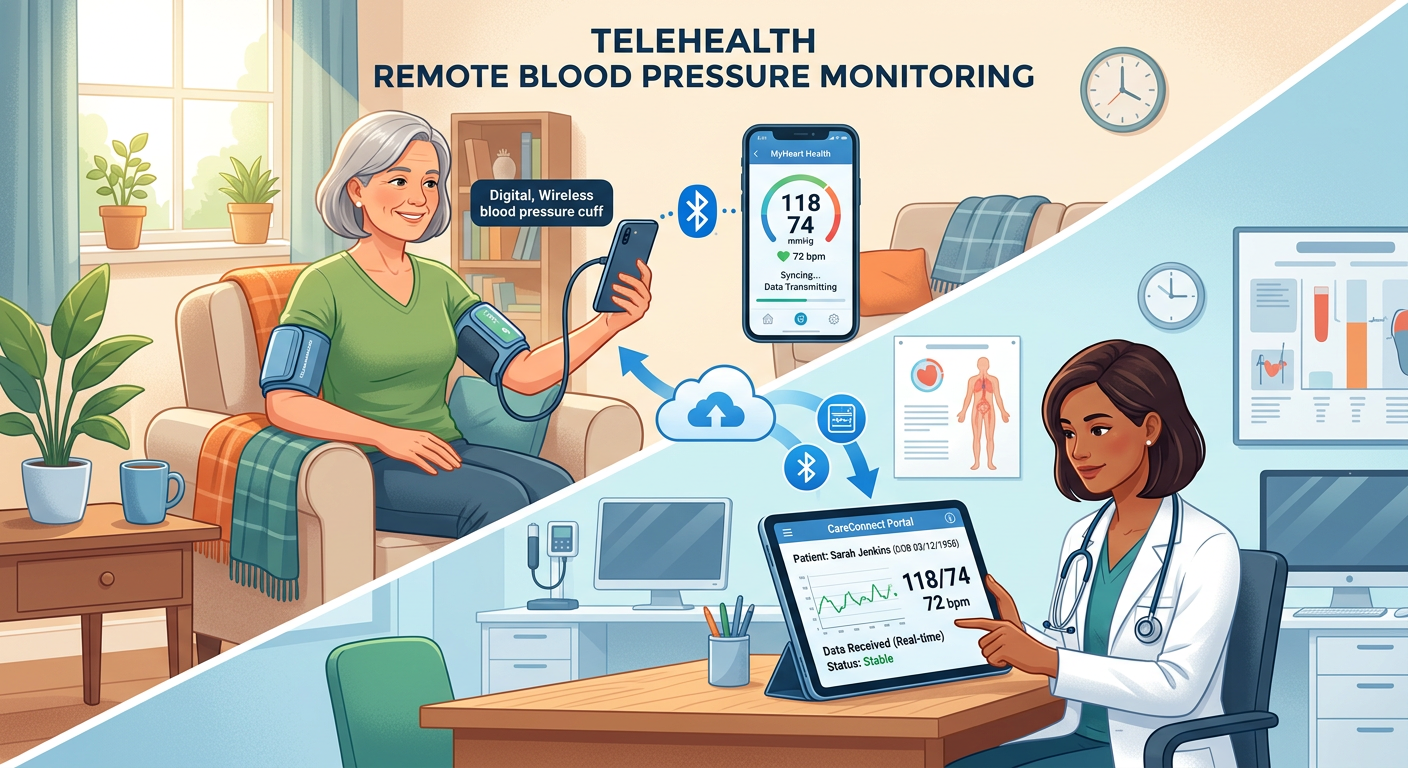
The term “virtual ward” has been used loosely enough to mean almost anything. In the context of care homes, it refers to a structured clinical pathway in which residents who would previously have been admitted to hospital are instead monitored remotely, with daily clinical oversight from an NHS team, using connected devices that feed data back to a central dashboard.
In practice, this means a care home resident with a chest infection or a deteriorating cardiac condition might have their oxygen saturation, heart rate, respiratory rate, and temperature monitored continuously through a wearable patch or a bedside device. That data flows in real time to a virtual ward hub, staffed by nurses and, in some cases, consultants, who review it alongside the resident’s care plan and escalate when thresholds are breached.
The Humber and North Yorkshire Health and Care Partnership was among the first to embed this model systematically in care homes, working with providers to equip staff with the training and equipment needed to participate. The results, published in 2024, showed a meaningful reduction in avoidable admissions among the cohort of care home residents enrolled on the virtual ward pathway. More striking was the qualitative feedback: residents reported feeling safer, and care home staff reported feeling less isolated in their clinical decision-making.
Why This Matters More Than the Technology
It would be easy to frame virtual ward monitoring as a technology story. The devices are impressive: continuous monitoring patches that require no wires, no cuffs, no disruption to sleep; dashboards that surface deterioration signals hours before they become crises; alert systems that notify the right clinician at the right time. The engineering is genuinely remarkable.
But the more important story is structural. For the first time, care homes are being formally integrated into NHS clinical pathways, not as a place to discharge patients to, but as a place where clinical care is actively delivered and monitored. That shift in status matters enormously for the sector.
Care home managers who have participated in virtual ward programmes consistently describe the same experience: being taken seriously as clinical partners. Having a named NHS contact. Receiving feedback on outcomes. Being included in the clinical conversation rather than handed a discharge letter and left to get on with it. These are not small things. They represent a fundamental change in how the NHS relates to the independent care sector.
The Providers Getting It Right
Barchester Healthcare, one of the UK’s largest care home operators, has been piloting virtual ward integration across a number of its homes in partnership with local NHS trusts. The model varies by geography, reflecting the patchwork of integrated care board priorities, but the common thread is a shared care record that both the care home team and the NHS virtual ward hub can access and update in real time.
What makes these pilots notable is not just the clinical outcomes, though early data is encouraging. It is the operational learning. Care home staff have developed new competencies in monitoring and escalation. Clinical leads within care homes have found a clearer professional identity. The boundary between health and social care, so often described as a fault line, has in these settings become something closer to a seam.
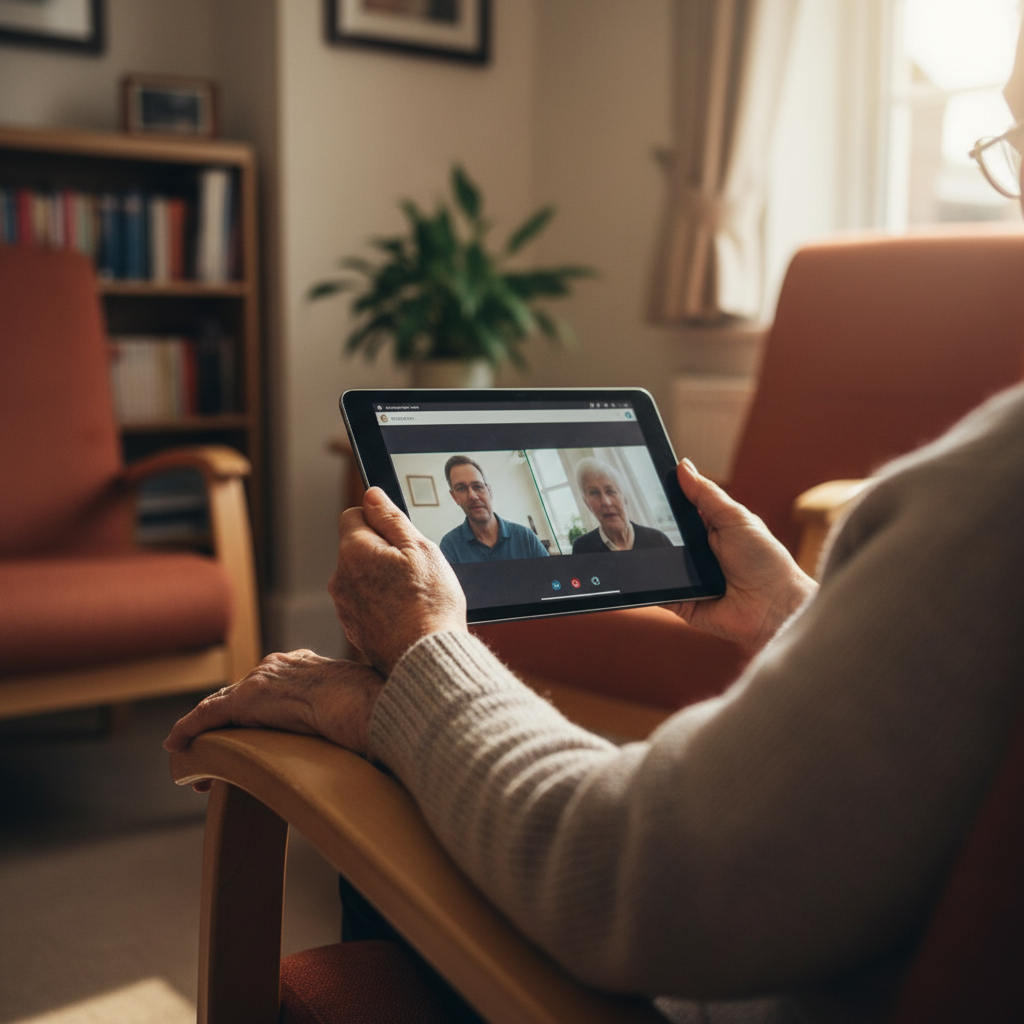
Smaller providers are also finding ways in. Several care homes in the South West have joined NHS-led virtual ward programmes without the infrastructure advantages of a large group, relying instead on tablet-based monitoring tools and structured daily check-in calls with community nursing teams. The technology is simpler; the principle is the same.
What the Data Is Starting to Show
NHS England’s virtual ward programme, which set a target of 10,000 virtual ward beds by December 2023, has generated a growing body of evidence on outcomes. While much of the published data focuses on the acute hospital population, a subset of studies has examined care home cohorts specifically.
The findings are consistent: residents enrolled on virtual ward pathways experience fewer emergency admissions, shorter lengths of stay when admission is unavoidable, and lower rates of readmission within 30 days. The cost savings are significant, though the more compelling argument for the sector is the quality-of-life data. Residents monitored in their own environment, surrounded by familiar faces and routines, fare better on measures of cognitive function and emotional wellbeing than those admitted to hospital for equivalent conditions.
This is not a surprise to anyone who has worked in care. It is, however, now being measured and reported in ways that carry weight in NHS planning conversations. That is new, and it matters.
The Road Ahead
Virtual ward monitoring in care homes is not yet universal, and it would be dishonest to pretend the rollout has been smooth everywhere. Connectivity remains a genuine barrier in some settings. The training burden on care home staff is real. And the patchwork of integrated care board priorities means that a care home in one part of England may have access to a sophisticated virtual ward programme while a comparable home twenty miles away has nothing.
But the direction of travel is clear, and it is worth pausing to acknowledge what has been achieved. A model that barely existed in care homes three years ago is now embedded in dozens of NHS systems. Residents who would have spent weeks in hospital are recovering in their own rooms. Care home staff are being recognised as clinical partners in a way the sector has long deserved.
The ward came to them. That is not a small thing.