

Every day, in thousands of care homes across the UK, a nurse or senior carer picks up a pen and manually initials a paper Medicines Administration Record. They do this for every resident, every medication, every round, sometimes managing 30 or 40 people, each with complex poly-pharmacy regimes. One missed signature, one illegible entry, one chart left on the wrong trolley, and the consequences can be serious. In some cases, they have been fatal.
Electronic Medicines Administration Records (eMAR), have existed as a credible, affordable solution for well over a decade. The evidence base for their impact on medication error reduction is substantial. The technology is mature, the suppliers are established, and the regulatory pressure to adopt digital systems has never been greater. And yet, according to sector estimates, a significant proportion of UK care homes, particularly smaller, independent providers, are still running paper MAR charts as their primary medicines management tool.
This is not a technology problem. It is a structural one, and the sector needs to be honest about that.
What eMAR Actually Does
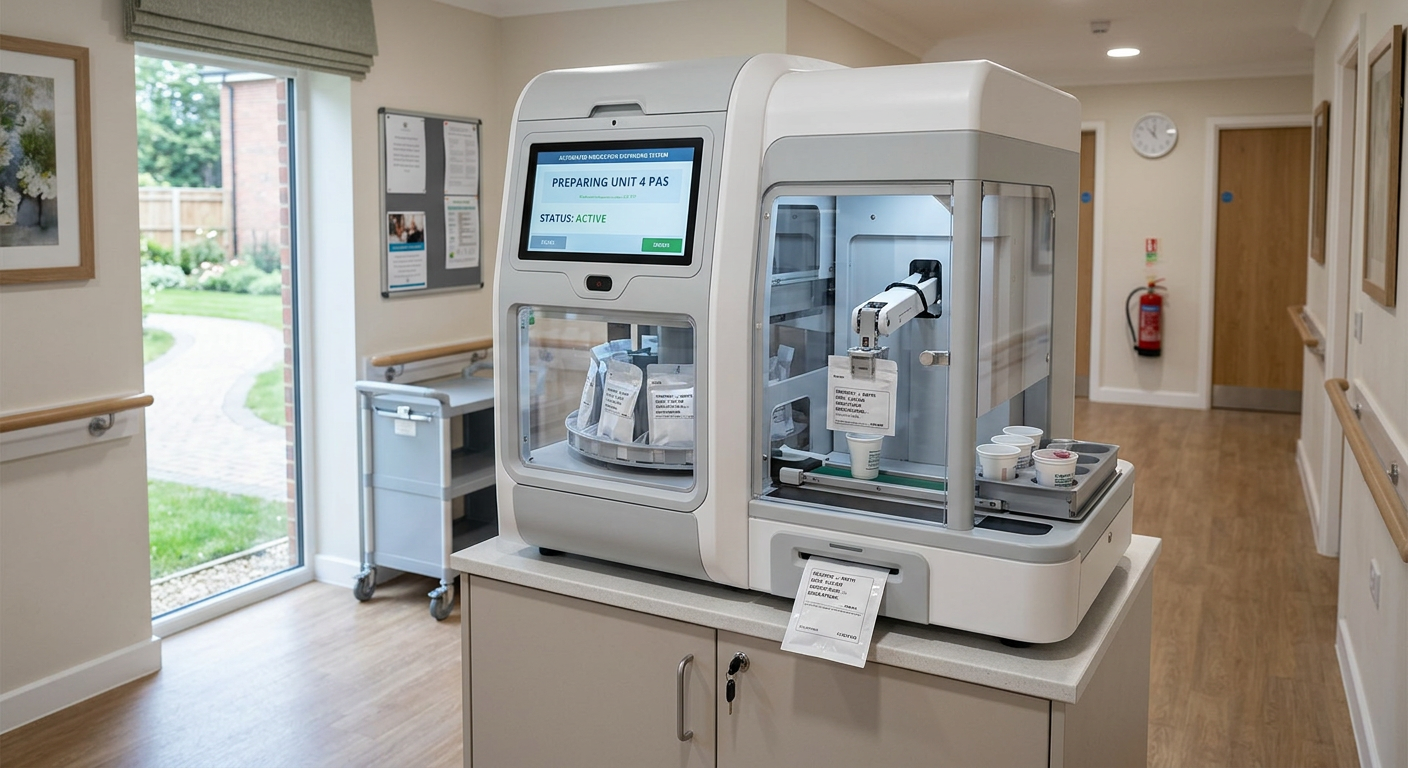
At its core, eMAR software replaces the paper chart with a digital record of every medication administered, refused, or omitted. But the better platforms do considerably more than that. They integrate with pharmacy dispensing systems to reduce transcription errors at the point of ordering. They flag missed doses in real time. They generate audit trails that are timestamped, staff-attributed, and immediately available to inspectors. They alert senior staff when a PRN medication is being used at an unusual frequency, a signal that might indicate unmanaged pain or deteriorating mental health.
For a CQC inspector reviewing medicines management, the difference between a paper MAR and a well-implemented eMAR system is the difference between a folder of handwritten charts and a live, searchable, evidence-rich record. The former requires significant manual effort to audit; the latter makes compliance almost self-documenting.
The care quality compliance argument alone should be compelling. But it hasn’t been enough.
The Barriers Are Real, But They’re Being Overstated
The most commonly cited barriers to eMAR adoption are cost, connectivity, and staff resistance. All three are legitimate. A small, 20-bed residential home operating on thin local authority fee rates cannot easily absorb a five-figure technology investment. Rural care homes in areas with poor broadband infrastructure face genuine connectivity challenges. And any manager who has tried to introduce a new digital system to a team of experienced carers knows that change management is not a trivial undertaking.
But these barriers are frequently used to justify inaction rather than to frame a genuine problem-solving conversation. The cost of eMAR has fallen considerably. Several suppliers now offer subscription-based pricing that makes the monthly outlay comparable to a few hours of agency staff time. NHS-funded connectivity improvement programmes have extended decent broadband to many previously underserved areas. And the staff resistance argument, while real, tends to dissolve quickly once a team has experienced the practical benefits; no more hunting for a chart, no more deciphering handwriting, no more uncertainty about whether a medication was given on the night shift.
The more honest barrier is this: for many small providers, digital transformation requires a level of strategic leadership capacity that simply doesn’t exist. The registered manager is also the senior carer, the compliance lead, the HR function, and the person who covers shifts when someone calls in sick. Asking that person to also project-manage a medicines management software implementation is asking a great deal.
Where the Responsibility Lies
The NHS has invested heavily in digital transformation for acute and primary care settings. The care home sector, which provides care for some of the most medically complex people in the country, has largely been left to navigate this transition alone, with minimal infrastructure support and no equivalent of the GP IT systems funding that transformed primary care records two decades ago.
Integrated Care Boards have a role to play here that most are not yet playing. Where care homes sit within virtual ward programmes or enhanced health in care home frameworks, the expectation of digital medicines management should be explicit, and the support to achieve it should be funded. Pharmacy teams embedded in care home support roles are well-placed to drive eMAR adoption, but only if they’re given the time and mandate to do so.
The CQC’s new assessment framework places significant weight on safe medicines management. Inspectors are increasingly sophisticated in their understanding of what good digital medicines management looks like. The regulatory signal is clear. What’s missing is the system-level support to help providers respond to it.
The Cost of Doing Nothing
Medication errors in care homes are not rare events. A 2020 report from the Care Quality Commission identified medicines management as one of the most common areas of concern in inadequate-rated services. The human cost, in harm, in distress, in avoidable hospital admissions, is significant. The financial cost, in terms of regulatory action, litigation, and reputational damage, is also considerable.
eMAR is not a silver bullet. A poorly implemented system, used by undertrained staff in a culture that doesn’t value accuracy, will not eliminate errors. But a well-implemented eMAR system, integrated with pharmacy and care planning software, and supported by proper training and governance, is demonstrably safer than a paper chart. The evidence is not ambiguous on this point.
The paper MAR chart has had its time. The question is no longer whether care homes should move to eMAR, it’s why so many haven’t and who is going to take responsibility for closing that gap. The answer to the first question is complicated. The answer to the second should not be.
Related Reading
- The CQC Inspection Is Coming. Is Your Evidence Ready, or Just Somewhere on a Shelf?
- Digital Care Management Platforms in UK Care Homes: Where Are We in 2026?
- The Forgotten Vital Sign: Why Food and Fluid Monitoring in Care Homes Is Still Failing Residents
Frequently Asked Questions
What is an electronic MAR chart?
An electronic Medicines Administration Record (eMAR) is a digital system for recording medication given to residents, replacing handwritten paper charts. eMAR systems log who administered medication, when, and whether it was refused or missed—creating a real-time, auditable medication record.
Are electronic MAR charts mandatory in UK care homes?
Not yet mandatory, but NICE guidelines and CQC inspection frameworks strongly favour digital medicines management. Several integrated care systems are actively incentivising eMAR adoption. The DHSC’s plan for digital social care sets an expectation of widespread eMAR use by 2025.
What eMAR systems are available for UK care homes?
Leading eMAR platforms include Omnicell, Biodose, and those integrated within broader care management systems like Nourish and Person Centred Software. Some systems connect directly with pharmacy dispensing to pre-populate administration records and flag missed doses automatically.