
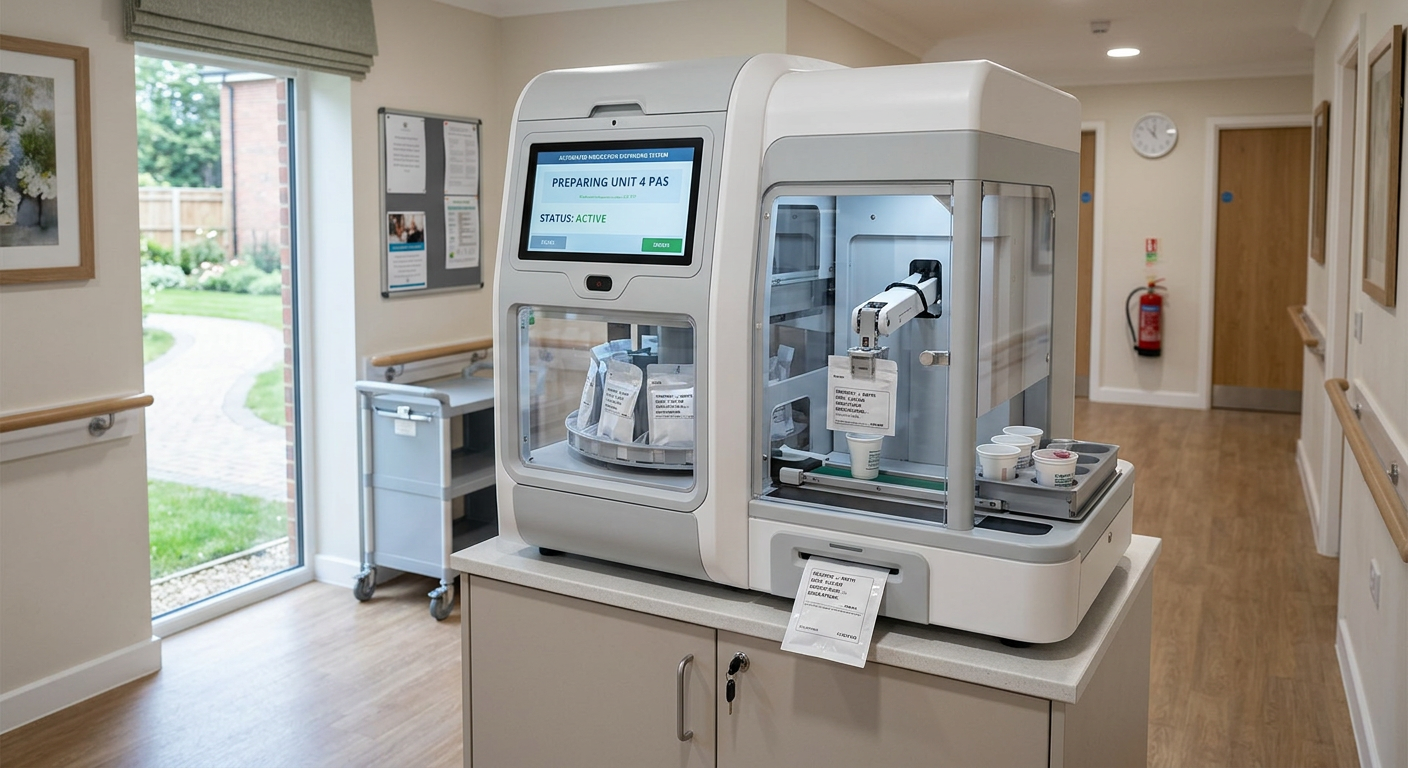
There is a machine sitting in the medication room of a growing number of UK care homes. It whirs, sorts, and dispenses. It promises to cut medication errors, free up nursing time, and bring a degree of pharmaceutical precision that human hands, tired, rushed, working a double shift, cannot always guarantee. The automated medication dispensing unit has arrived in adult social care. The question is whether it is actually delivering.
The Case for Automation
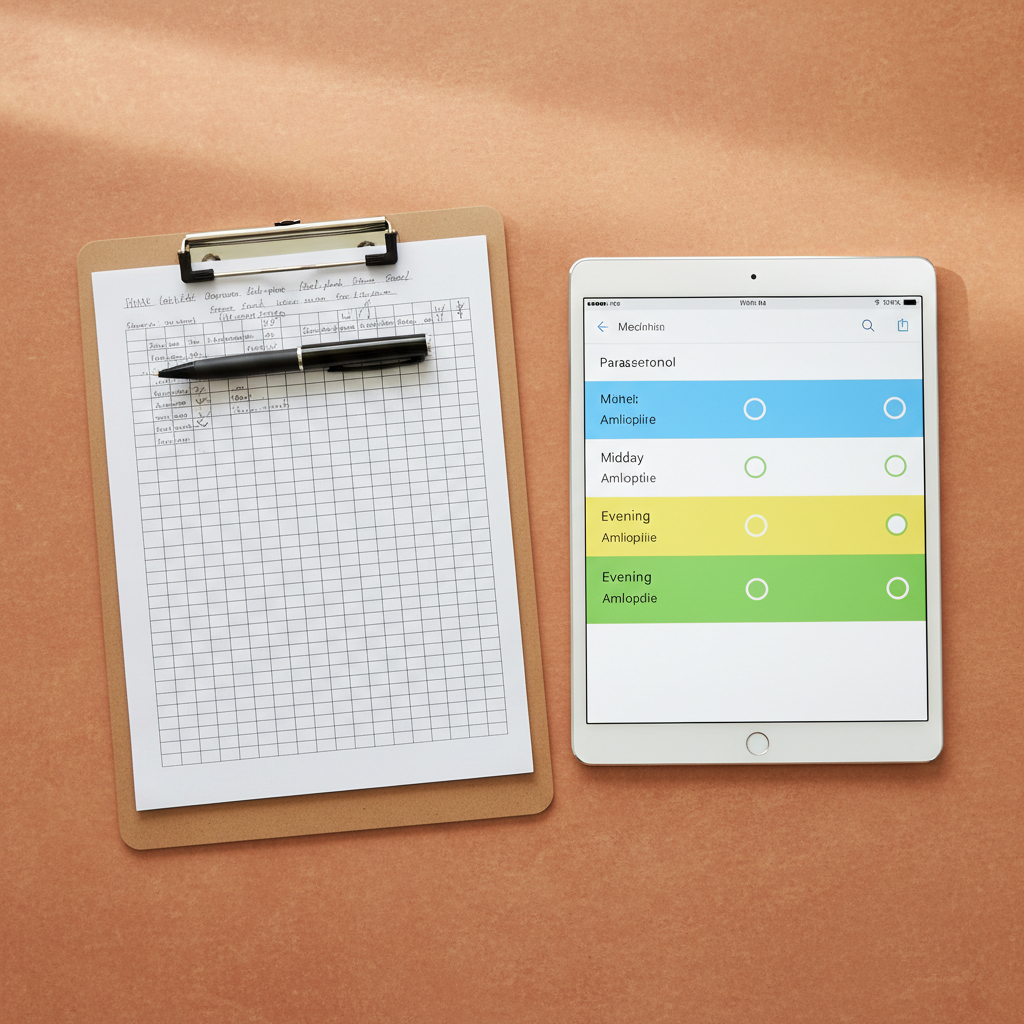
The argument for automated dispensing is not hard to make. Medication errors in care homes remain a persistent and serious problem. A 2020 report from the Care Quality Commission identified medicines management as one of the most common areas of concern in inadequate-rated services. The manual preparation of medication rounds – counting tablets, cross-referencing MAR charts, managing controlled drugs – is time-consuming, cognitively demanding, and prone to interruption. In a sector where staffing ratios are stretched and agency cover is routine, the conditions for error are structural, not individual.
Automated dispensing units, from Dosette-style robots to more sophisticated carousel systems like those offered by Pivotal and similar providers, address this directly. They pre-sort medication into individual pouches or compartments, time-locked and labelled, reducing the preparation burden on care staff and creating an auditable trail. In theory, the right medication reaches the right resident at the right time, with less human handling at every stage.
For providers operating at scale – large care groups running dozens of homes – the efficiency case is compelling. Reduced preparation time, fewer pharmacy returns, lower waste, and a cleaner compliance record. The technology has been standard in hospital pharmacy for years. Its migration into residential care feels, on paper, like an obvious next step.
Where the Reality Gets Complicated
But the care home is not a hospital pharmacy. And the gap between those two environments is where the real story lives.
Automated dispensing units work best when medication regimens are stable and predictable. In a care home population, older, frailer, with multiple comorbidities and frequently changing prescriptions, that stability is often absent. PRN medications, dose changes, short-course antibiotics, and end-of-life prescribing all create exceptions that automated systems handle poorly. The machine is optimised for routine. Care home medicines management is anything but.
There is also the question of integration. Most dispensing units operate as standalone systems. They do not talk to the care home’s electronic medicines administration record (eMAR). They do not feed data into the care management platform. The audit trail they create exists in isolation; useful for the machine’s own reporting, but disconnected from the broader digital ecosystem that providers are trying to build. In a sector where interoperability is already a chronic weakness, adding another siloed system is not a neutral act.
And then there is the workforce question, the one that tends to get glossed over in vendor presentations. Automated dispensing does not eliminate the need for skilled medicines management. It redistributes it. Staff still need to load the machine correctly, manage exceptions, respond to alerts, and exercise clinical judgement at the point of administration. If the introduction of a dispensing robot leads managers to conclude that less trained staff can now handle the medication round, the technology has not reduced risk. It has relocated it.
The Procurement Problem
Many providers who have invested in automated dispensing units report a familiar pattern: a strong pilot, enthusiastic vendor support during implementation, and then a gradual drift as the novelty fades and the operational realities accumulate. Exception management becomes burdensome. Staff find workarounds. The machine sits in the medication room, technically operational, practically underused.
This is not a technology failure. It is a procurement and implementation failure, and it is entirely predictable. The care sector has a long history of purchasing technology solutions without adequately scoping the workflow changes, training requirements, and ongoing support structures that make them work. Automated dispensing is no different. The machine is only as good as the system built around it.
Providers considering this technology need to ask harder questions before signing contracts. What happens when a resident’s medication changes mid-cycle? How does the system handle PRN administration? What is the integration pathway to our eMAR? What does the exception rate look like in homes similar to ours, and who manages those exceptions? What training is required, and who delivers it after go-live?
A Technology Worth Having, On the Right Terms
None of this is an argument against automated medication dispensing. The underlying logic is sound, and the best implementations genuinely do reduce error rates and free up nursing time for direct care. But the sector needs to approach this technology with the same critical rigour it would apply to any significant clinical process change, because that is exactly what it is.
The dispensing robot in the medication room is not a solution. It is a tool. Whether it makes care safer depends almost entirely on the decisions made before it is switched on, and the discipline to keep asking whether it is working long after the vendor has moved on to the next sale.