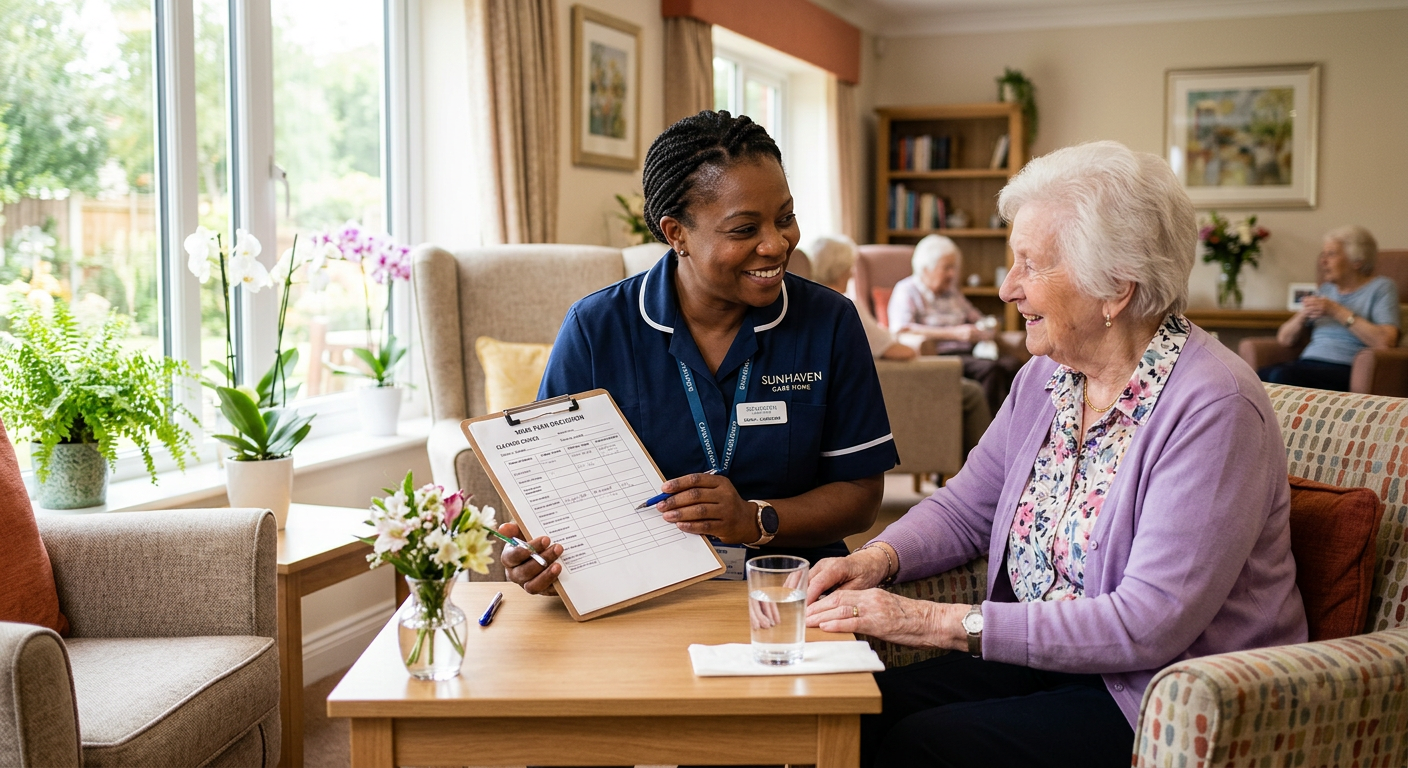

For many people living in UK care homes, the ability to communicate, to express a need, share a feeling, or simply say yes or no, is not something that can be taken for granted. Conditions such as stroke, motor neurone disease, cerebral palsy, dementia, and acquired brain injury can strip away the ability to speak, leaving individuals isolated and dependent on others to interpret their needs. Augmentative and Alternative Communication (AAC) devices are changing that, and care providers who embrace them are delivering a fundamentally more dignified, person-centred experience.
What Are AAC Devices?
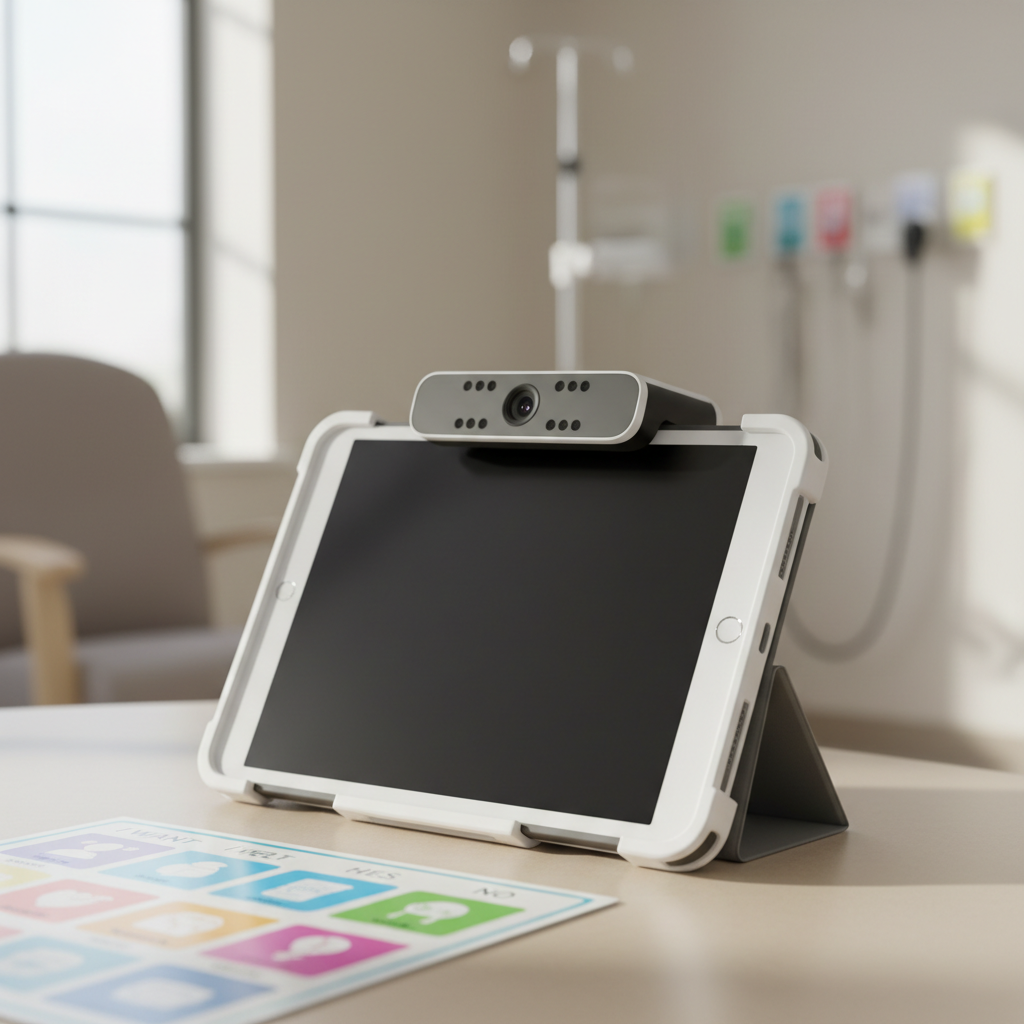
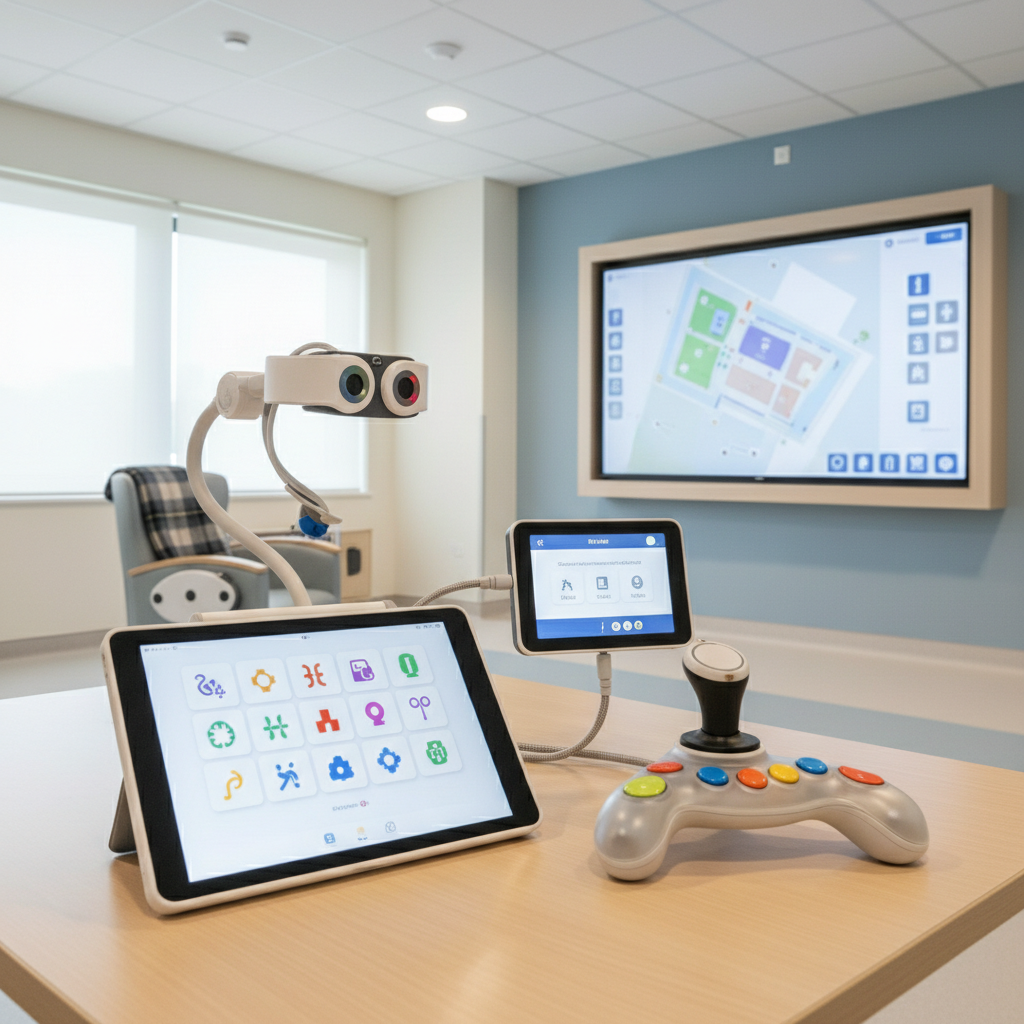
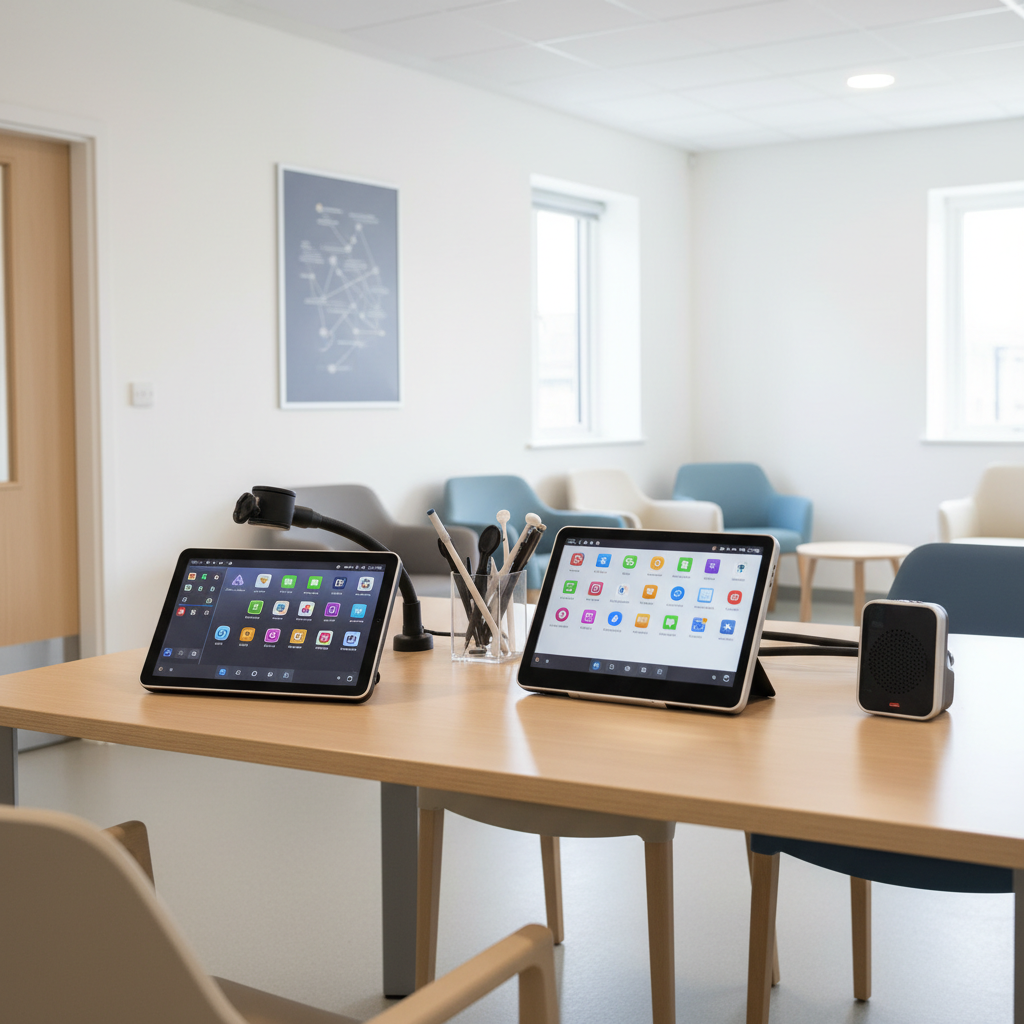
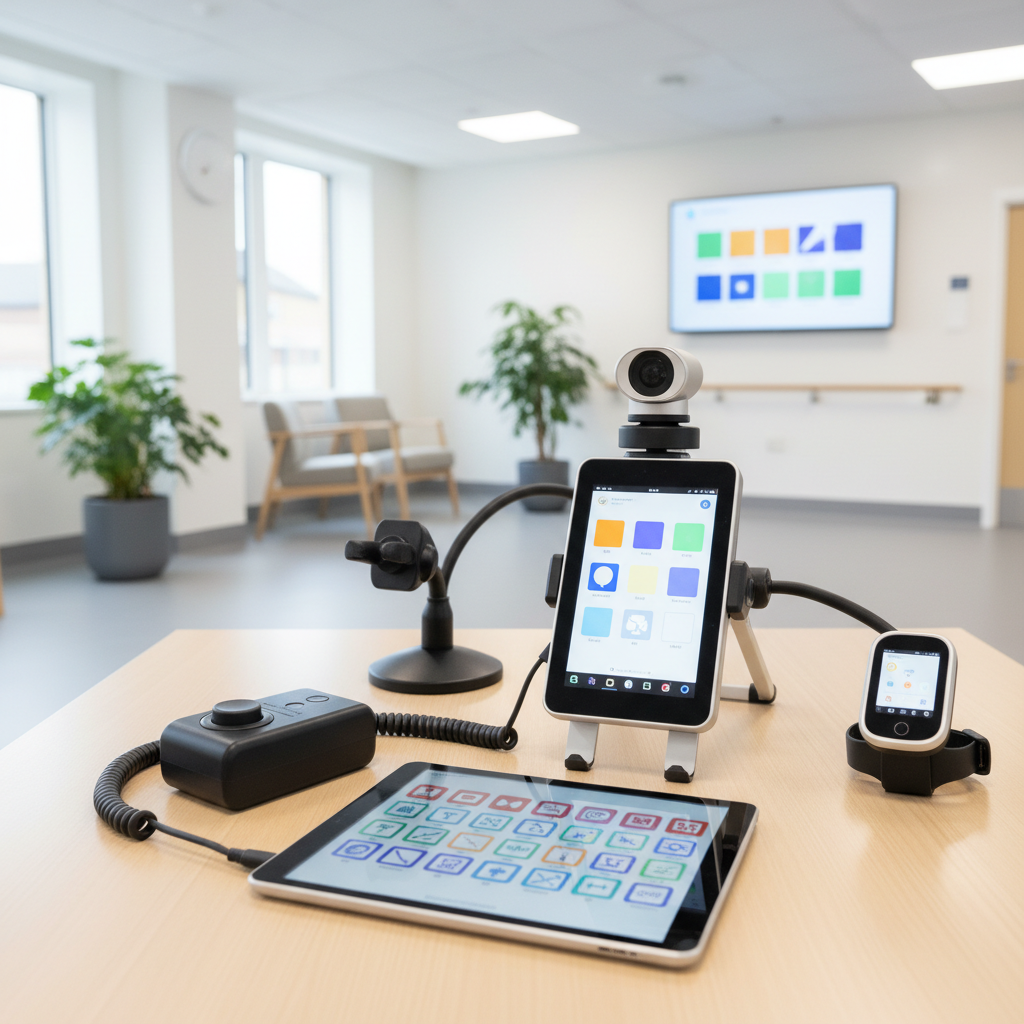
AAC is an umbrella term for tools and strategies that support or replace spoken communication. In the context of adult social care, AAC devices range from low-tech symbol boards and picture cards to sophisticated high-tech speech-generating devices (SGDs) that allow users to construct sentences and have them spoken aloud. Modern AAC technology includes tablet-based apps, eye-gaze systems, switch-access devices, and voice output communication aids (VOCAs), all designed to give a voice to those who cannot speak for themselves.
Accessibility in care is not just about ramps and wide doorways. True accessibility means ensuring every resident can communicate, participate, and be heard, and AAC devices are central to achieving that.
Who Benefits in a Care Home Setting?
The range of residents who can benefit from AAC technology in UK care homes is broader than many providers realise. Key groups include:
- Stroke survivors with aphasia or dysarthria who retain cognitive ability but have lost the physical capacity to speak clearly
- People with motor neurone disease (MND) who face progressive loss of speech and need scalable AAC solutions that adapt as their condition changes
- Residents with advanced dementia who may respond to symbol-based or picture communication systems even when verbal language has declined
- Individuals with learning disabilities who have always relied on AAC and need continuity of support when transitioning into residential care
- Those recovering from acquired brain injuries who may need AAC as a temporary bridge during rehabilitation
The Technology Available Today
The AAC landscape has evolved rapidly. Care managers and technology decision-makers should be aware of the main categories of device now available:
- Symbol-based apps such as Proloquo2Go, Grid 3, and Snap Core First run on standard tablets and allow users to build sentences from picture symbols. These are often the most accessible entry point for care homes.
- Speech-generating devices (SGDs) are dedicated hardware units with robust, care-environment-friendly casings, loud speakers, and customisable vocabulary sets.
- Eye-gaze AAC systems use infrared cameras to track eye movement, allowing users with no functional limb movement to select symbols and generate speech; a life-changing technology for people with MND or locked-in syndrome.
- Switch-access AAC enables users with very limited movement to navigate communication software using a single switch, activated by a hand, foot, or head movement.
- Voice banking tools such as ModelTalker and VocaliD allow people who are losing their speech to record their voice before it deteriorates, preserving a personalised voice for use in their SGD.
Practical Steps for Care Providers
Introducing AAC into a care home requires more than purchasing a device. Here is how to approach it effectively:
- Involve a speech and language therapist (SLT). AAC assessment and prescription should always involve an NHS or independent SLT. They will assess the individual’s cognitive, physical, and communication profile and recommend the most appropriate system.
- Train your whole team. An AAC device is only useful if staff know how to support its use. Training should cover how to model AAC (using the device yourself when speaking to the resident), how to charge and maintain devices, and how to troubleshoot common issues.
- Personalise vocabulary. Generic symbol sets are a starting point, but the most effective AAC systems are tailored to the individual, including their preferred topics, names of family members, favourite foods, and daily routines.
- Embed AAC into care planning. Document each resident’s AAC needs and strategies in their digital care plan, so that all staff, including agency workers, understand how to communicate with them.
- Review regularly. Communication needs change. A resident’s AAC system should be reviewed at least annually, or whenever their condition changes significantly.
The Accessibility in Care Imperative
The Care Quality Commission‘s quality statements place significant emphasis on person-centred care, dignity, and the right of every individual to be involved in decisions about their own life. For residents who cannot speak, AAC is not a luxury, it is a fundamental enabler of those rights. Providers who invest in AAC technology and the training to support it are not just ticking a compliance box; they are making a profound commitment to the people in their care.
As digital transformation continues to reshape UK adult social care, accessibility in care must be part of that conversation. AAC devices represent one of the most direct, human-centred applications of technology in the sector, giving people back their voice, their agency, and their dignity.
Further Reading
- 7 AAC Devices and Communication Technologies Transforming Accessibility in UK Care Homes
- Eye-Gaze Technology in Care: What It Is and How to Introduce It in Your Service
- Transforming Communication and Accessibility in UK Care Homes
Related Reading
- 7 AAC Devices and Communication Technologies Transforming Accessibility in UK Care Homes
- Transforming Communication and Accessibility in UK Care Homes
- Eye-Gaze Technology in Care: What It Is and How to Introduce It in Your Service
Frequently Asked Questions
What is augmentative and alternative communication (AAC)?
AAC is a broad term for methods that supplement or replace spoken or written communication for people with communication difficulties. It includes unaided methods (sign language, gesture) and aided methods (communication boards, speech generating devices, eye gaze systems). In care settings, AAC enables residents to express needs, preferences and emotions independently.
Which residents in care homes might benefit from AAC?
Residents with conditions affecting speech or language including stroke, MND, Huntington’s disease, dementia, cerebral palsy, autism and acquired brain injury may benefit from AAC assessment. A speech and language therapist should lead assessment and device selection, tailoring the approach to the individual’s cognitive and physical abilities.
How do care homes introduce AAC for residents?
Start with a referral to a specialist speech and language therapist. Involve family members from the outset. Ensure all staff are trained to support the communication method consistently. Embedding AAC in everyday care—not just formal therapy sessions—is essential for residents to gain confidence and functionality.