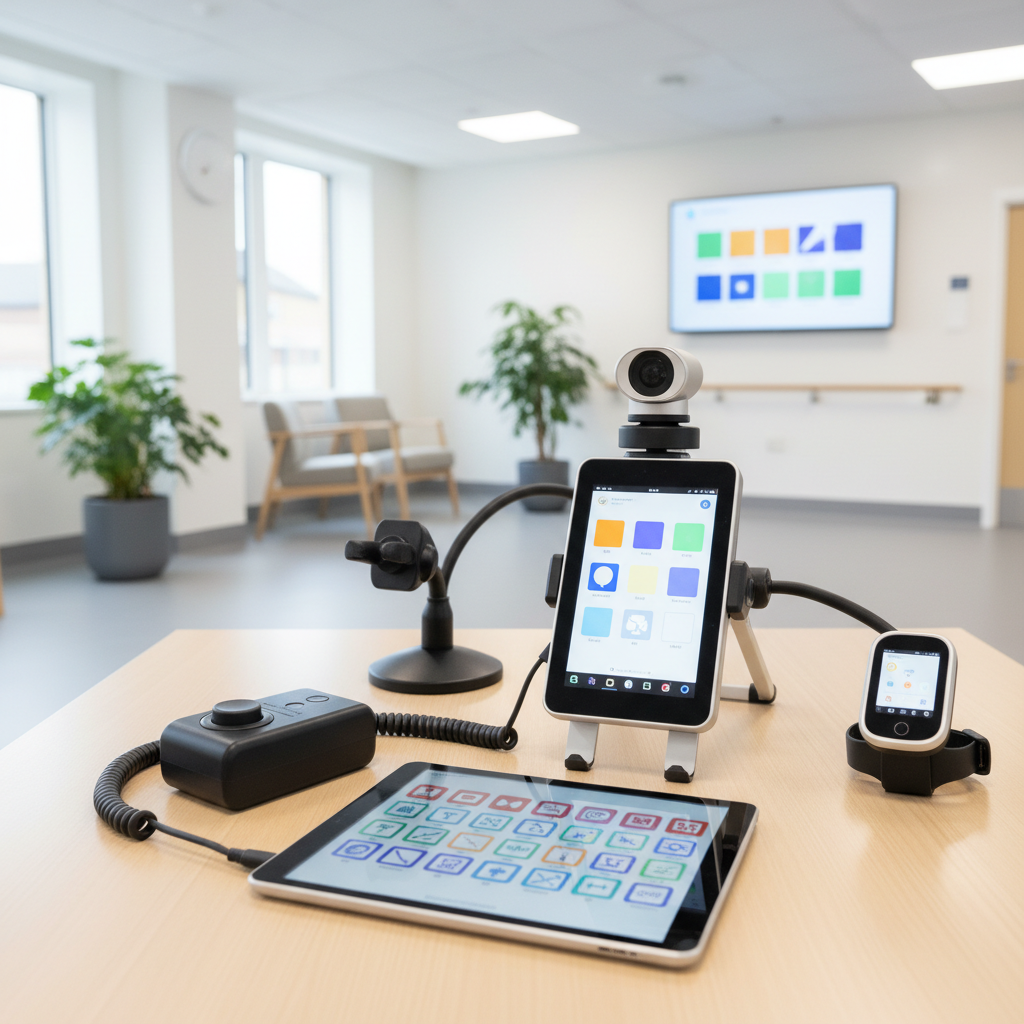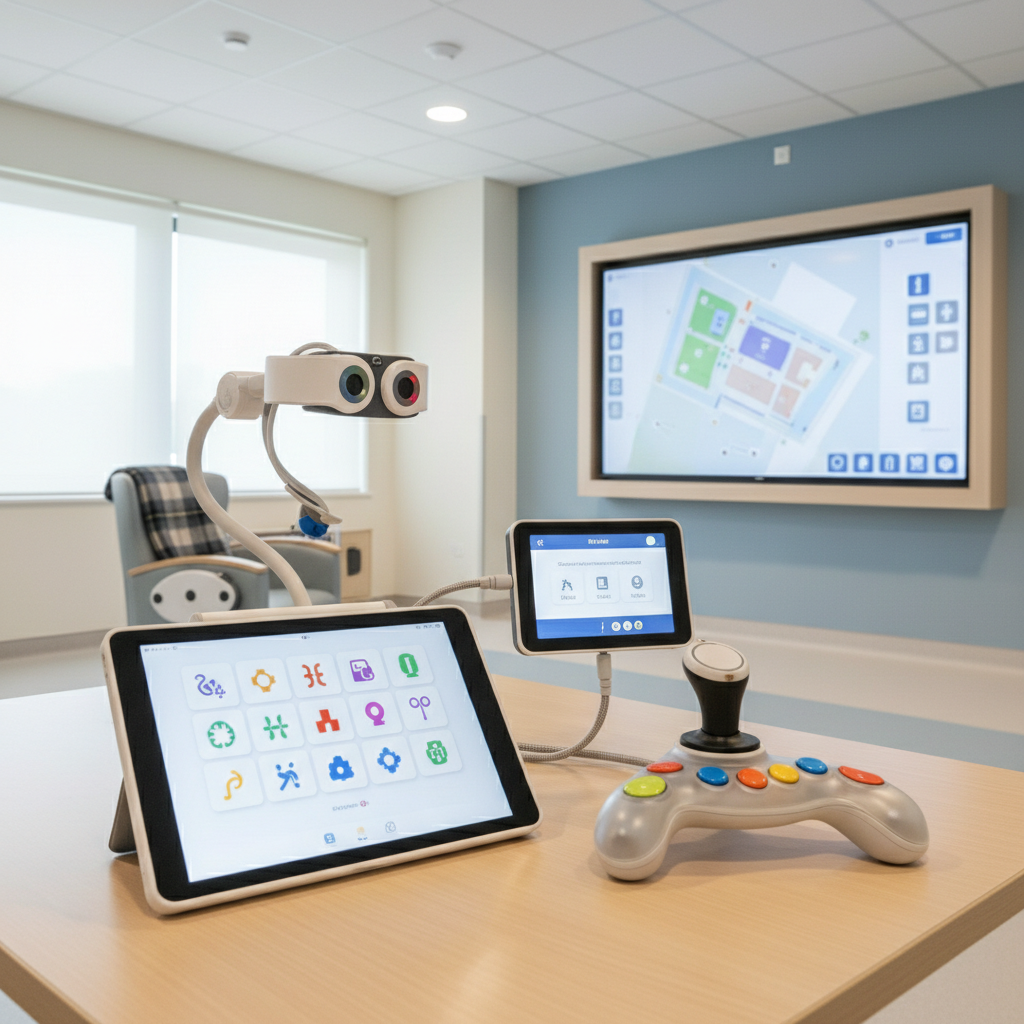

For residents who have lost the ability to speak or move freely, whether through motor neurone disease, stroke, cerebral palsy, or advanced dementia, the ability to communicate can feel impossibly out of reach. Eye-gaze technology is changing that. By tracking the movement of a person’s eyes, these systems allow individuals to control a screen, select words, and express their needs using nothing more than their gaze.
For care home managers and care directors, understanding eye-gaze technology is no longer a niche concern. As the UK adult social care sector embraces digital tools to improve resident outcomes and meet CQC expectations around person-centred care, eye-gaze systems are becoming an increasingly important part of the accessibility toolkit.
How Does Eye-Gaze Technology Work?
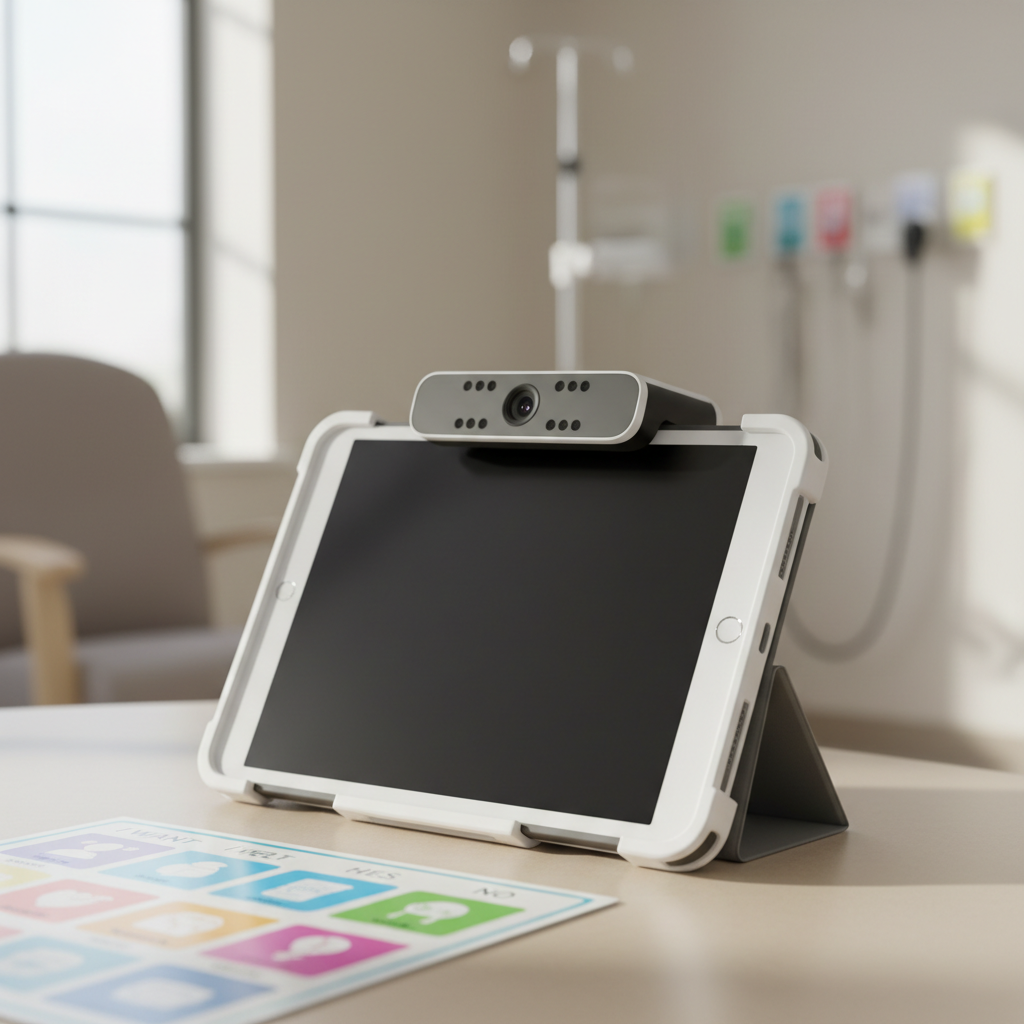
Eye-gaze devices use infrared light and cameras to track the precise movement of a user’s eyes across a screen. The system detects where the person is looking and translates that into an action; selecting a letter, a symbol, a phrase, or a command. Most modern systems require only a brief calibration session to map the individual’s eye movement patterns.
The technology is typically mounted on a tablet, laptop, or dedicated communication device. Software platforms such as Tobii Dynavox, EyeTech Digital Systems, and Grid 3 provide the interface through which users interact, from simple yes/no responses to full sentence construction and even environmental controls like adjusting a TV or calling for a carer.
Who Benefits Most in a Care Setting?
Eye-gaze technology is particularly valuable for residents with:
- Motor neurone disease (MND) or ALS, where physical movement progressively diminishes
- Locked-in syndrome following stroke
- Cerebral palsy or other conditions affecting motor control
- Advanced multiple sclerosis
- Acquired brain injuries affecting speech and movement
Even residents with limited cognitive capacity can benefit from simplified eye-gaze interfaces that allow them to make basic choices; what to watch, what to eat, or simply to signal discomfort. This directly supports the CQC’s Well-led and Responsive quality standards, demonstrating that your service actively enables resident voice and choice.
How to Introduce Eye-Gaze Technology in Your Service
Introducing eye-gaze technology doesn’t have to be overwhelming. Here’s a practical step-by-step approach:
1. Identify the right residents. Work with your clinical team, speech and language therapists (SALTs), and occupational therapists to identify residents who would benefit most. A formal communication needs assessment is the right starting point — don’t assume; assess.
2. Involve the multidisciplinary team. Eye-gaze technology works best when introduced as part of a broader communication support plan. SALTs are often the lead professionals in this area and can advise on appropriate software, vocabulary sets, and positioning of the device.
3. Choose the right hardware and software. Entry-level systems can be surprisingly affordable — some tablet-mounted eye-gaze cameras cost under £500. More sophisticated dedicated devices with robust software can run to several thousand pounds. Consider whether funding is available through NHS Continuing Healthcare, local authority equipment budgets, or charitable grants such as those offered by the Motor Neurone Disease Association.
4. Train your staff. Technology is only as effective as the people supporting it. Ensure key staff, particularly those on regular shifts with the resident, understand how to set up the device, support calibration, and troubleshoot basic issues. Embed this into your induction and ongoing training programme.
5. Review and adapt regularly. A resident’s needs will change over time, particularly in progressive conditions. Build in regular reviews, at least every three months, to ensure the system still meets their communication needs and that vocabulary or interface settings are updated accordingly.
Common Barriers, and How to Overcome Them
Care providers sometimes hesitate to introduce eye-gaze technology due to concerns about cost, complexity, or staff capacity. These are understandable, but often overstated:
- Cost: Funding routes exist. Explore NHS AT (Assistive Technology) services, local authority equipment pathways, and charitable grants before assuming the cost falls entirely on the provider.
- Complexity: Modern eye-gaze systems are far more intuitive than they were a decade ago. Most can be set up and calibrated in under an hour with basic training.
- Staff time: Once set up, eye-gaze devices are largely self-managed by the resident. The ongoing staff commitment is minimal compared to the quality-of-life benefit delivered.
The Bigger Picture: Accessibility as a Quality Standard
Eye-gaze technology sits at the intersection of accessibility, dignity, and person-centred care, three pillars that regulators, commissioners, and families increasingly scrutinise. A care service that actively invests in communication tools for its most vulnerable residents sends a powerful message about its values.
As the sector continues its digital transformation, accessibility technology like eye-gaze systems should not be an afterthought. For the residents who need it most, the ability to say “I’m in pain”, “I’d like to call my daughter”, or simply “yes”, using only their eyes, is not a luxury. It is a fundamental right.
If your service doesn’t yet have a pathway for assessing and introducing eye-gaze technology, now is the time to build one.
Further Reading
- How Augmentative and Alternative Communication Technology Is Transforming Accessibility
- 7 AAC Devices and Communication Technologies Transforming Accessibility in UK Care Homes
- Transforming Communication and Accessibility in UK Care Homes
Related Reading
- How Augmentative and Alternative Communication Technology Is Transforming Accessibility
- 7 AAC Devices and Communication Technologies Transforming Accessibility in UK Care Homes
- Transforming Communication and Accessibility in UK Care Homes
Frequently Asked Questions
What is eye gaze technology in care?
Eye gaze technology uses infrared cameras to track a user’s eye movements, allowing them to control a computer screen, communicate via symbols or text, and access environmental controls—purely through where they look. It is primarily used for people with conditions such as MND, cerebral palsy, locked-in syndrome or severe physical disabilities.
Who funds eye gaze technology in UK care homes?
Funding routes include NHS continuing healthcare, local authority adult social care budgets, NHS Assistive Technology services, and charitable grants. Care homes should involve a speech and language therapist (SLT) and occupational therapist in any assessment, as specialist advice is required to match the device to the individual’s abilities.
How long does it take to learn to use eye gaze technology?
Learning curves vary widely by individual. Some users achieve functional communication within days; others with more complex needs may take months with specialist support. Consistent practice, appropriate software setup, and involvement of family members in training significantly improve adoption rates.