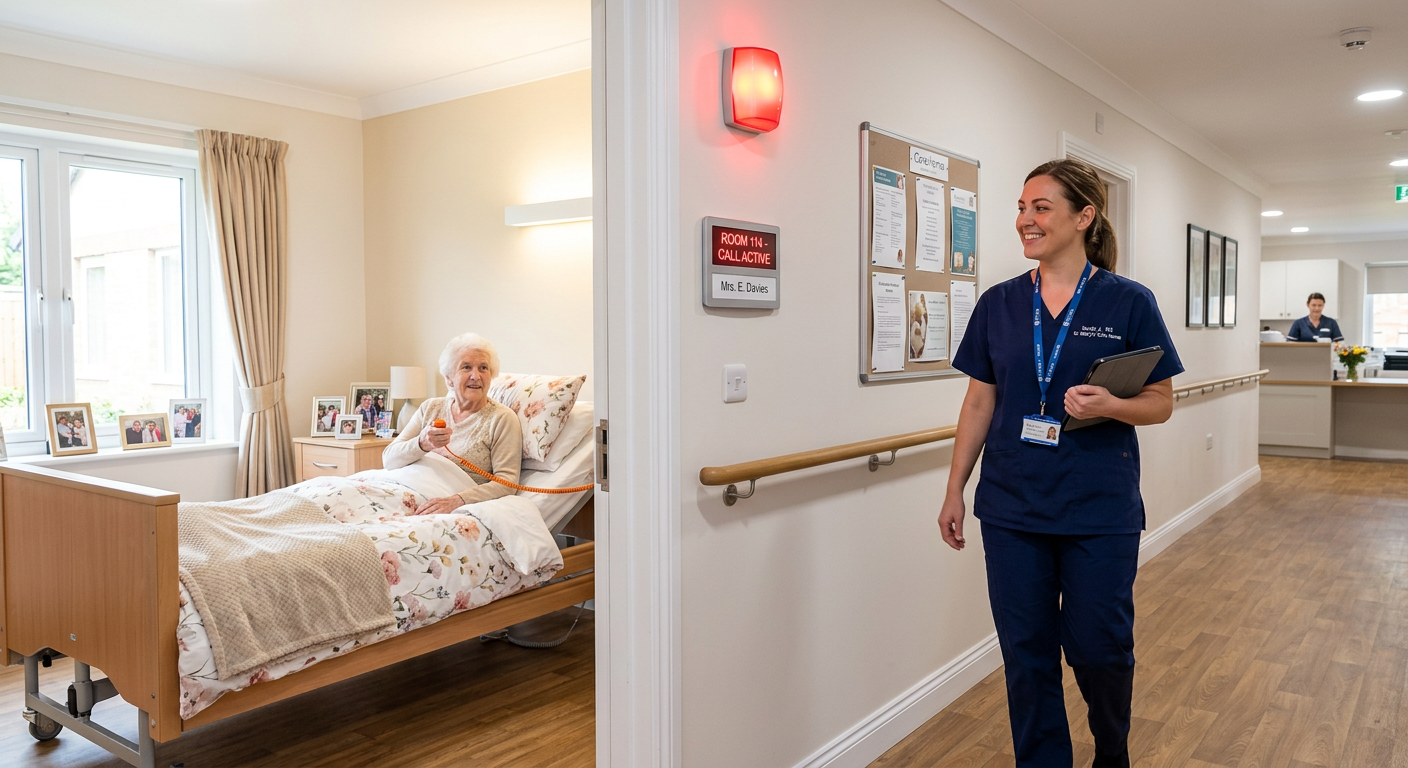

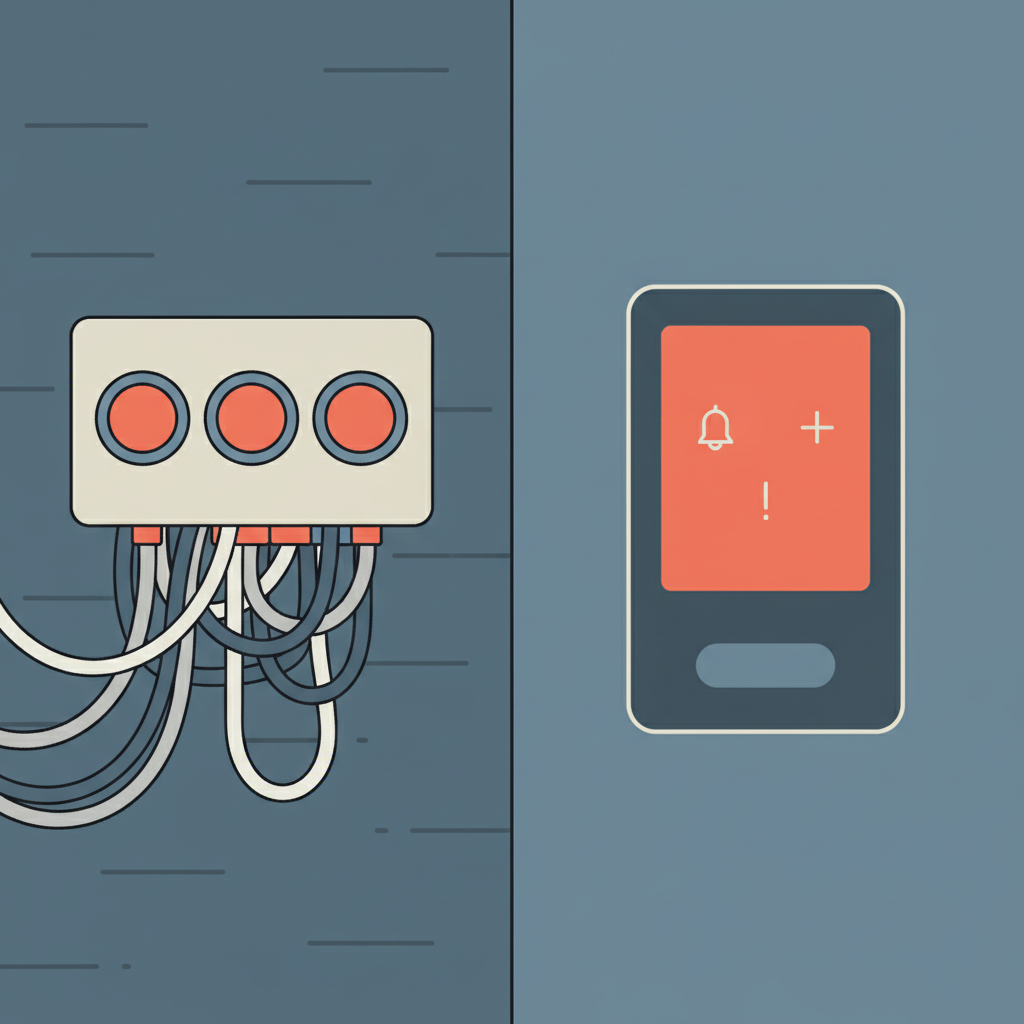
Walk into a significant proportion of UK care homes today and you will find, screwed to the wall above a resident’s bed, a piece of technology that would not look out of place in a 1980s hospital ward. The wired nurse call panel, chunky, analogue, and stubbornly persistent, remains the primary safety lifeline for hundreds of thousands of elderly people across England. That should concern us far more than it currently does.
The nurse call system is not a peripheral piece of kit. It is the mechanism by which a resident in distress summons help. It is, in the most literal sense, a safety-critical infrastructure. And yet, while the sector has invested heavily in electronic care records, eMAR platforms, and digital rostering tools, the humble call bell has largely been left to gather dust or, more accurately, to gather liability.
The Problem With Wired
Traditional wired nurse call systems were designed for a different era of care. They operate on a simple binary logic: button pressed, light activated, staff alerted. What they cannot do is tell you how long a resident waited before anyone responded. They cannot route an alert to the nearest available member of staff. They cannot integrate with a care record to flag that the resident pressing the button has a history of falls, or is on a high-risk medication regime. They cannot generate the kind of response-time data that a CQC inspector, or a coroner, might one day ask to see.
This is not a minor inconvenience. It is a structural gap in the quality and safety architecture of a care home. And the longer providers delay addressing it, the more exposed they become, operationally, reputationally, and legally.
The maintenance burden alone should be enough to prompt a rethink. Wired systems require physical cable runs throughout a building. A single fault can take an entire wing offline. Repairs require specialist engineers, often on expensive call-out contracts. In older buildings, and many UK care homes occupy Victorian or Edwardian stock, retrofitting or upgrading a wired system is a significant capital project. Providers frequently defer it, year after year, until a regulatory inspection or a serious incident forces the issue.
What the Sector Is Missing
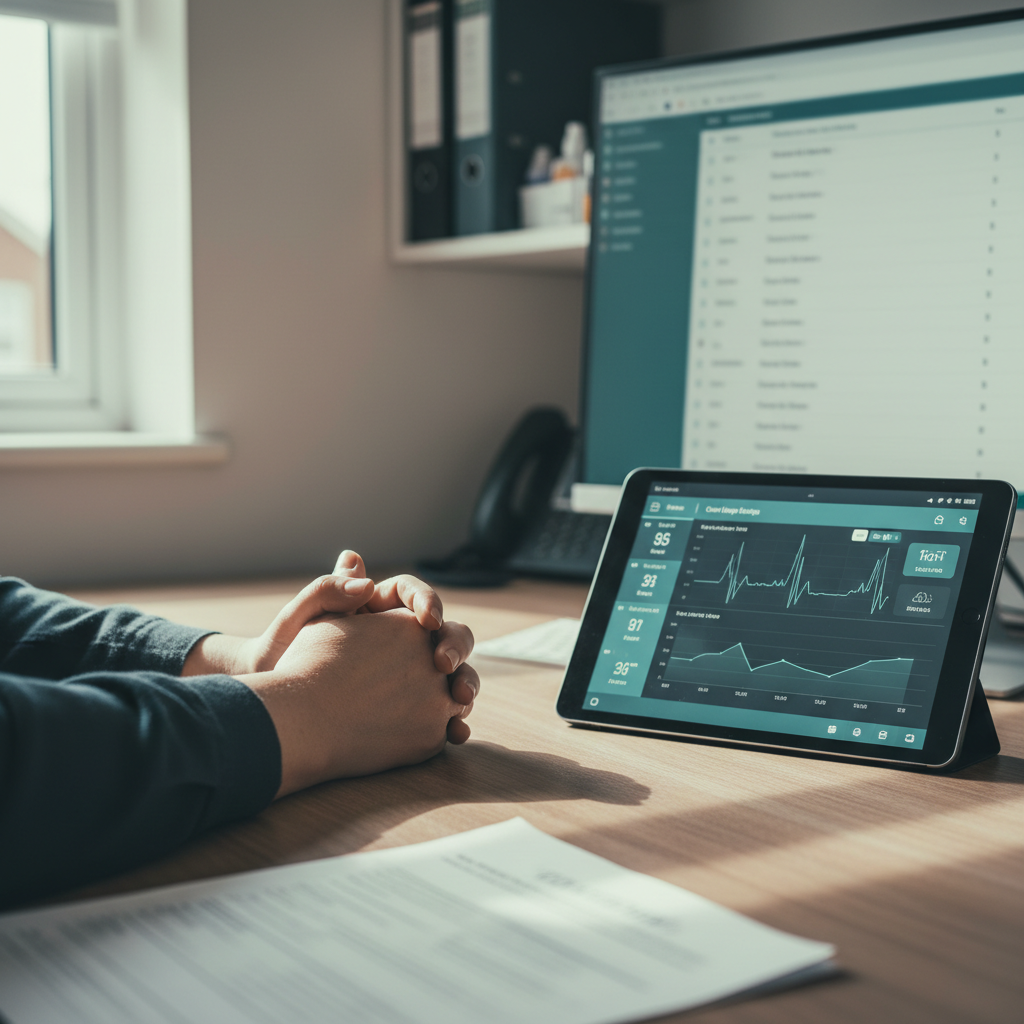
The contrast with modern wireless and IP-based nurse call platforms is stark. Contemporary systems can route alerts to staff smartphones or pagers, ensuring the right person receives the right notification in real time. They can integrate with electronic care records, automatically logging call events and response times. They can generate analytics dashboards that reveal patterns; which residents call most frequently, at what times of day, and whether response times are deteriorating on particular shifts.
That last capability matters enormously. Response time data is not just an operational metric; it is a quality indicator. A care home that can demonstrate consistent, documented response times has a fundamentally different relationship with its regulator than one that cannot. In a sector where the CQC’s Single Assessment Framework places increasing weight on evidence of safe, responsive care, the inability to produce this data is a meaningful vulnerability.
There is also a workforce dimension that is rarely discussed. Staff working in care homes with outdated nurse call infrastructure spend more time physically checking on residents, not because they are more attentive, but because the system gives them no information. A modern nurse call platform, integrated with bed sensors or motion detection, can tell a carer that a resident has been still for an unusual period, or that a call has gone unanswered for longer than the home’s own policy permits. That is not surveillance; it is intelligence. And it frees staff to focus their attention where it is most needed.
The Investment Conversation Nobody Wants to Have
The reason wired nurse call systems persist is not ignorance. Most care home managers know their systems are outdated. The reason is money or, more precisely, the difficulty of making the capital case to a board or owner group that is already navigating thin margins, rising wage costs, and an uncertain funding environment.
This is where the sector needs to reframe the conversation. A wired nurse call system is not a sunk cost to be maintained; it is a depreciating liability. The question is not whether to replace it, but when and whether that decision will be made proactively or reactively. Providers who wait for a serious incident, a failed inspection, or a system failure to force the issue will find the cost, in every sense, considerably higher.
Modern wireless nurse call systems are also more financially accessible than many providers assume. Cloud-based platforms have reduced upfront capital requirements. Some suppliers offer subscription or managed service models that convert capital expenditure into operational expenditure, a meaningful distinction for providers managing tight balance sheets. The total cost of ownership, when maintenance, engineer call-outs, and compliance risk are factored in, often favours replacement over continuation.
A Safety System That Should Not Be Optional
There is a broader principle at stake here. The nurse call system is not a nice-to-have digital upgrade. It is the foundational safety infrastructure of a care home. Treating it as a low-priority line item, something to be addressed after the new care management software, after the eMAR rollout, after the staff app, reflects a misunderstanding of where digital investment creates the most direct impact on resident safety.
The sector has made genuine progress on digital transformation over the past five years. But progress on the visible, headline-grabbing technologies – AI, predictive analytics, digital care records – should not obscure the fact that in many homes, the most basic safety system is still running on infrastructure designed before the internet existed.
The call bell that time forgot is not a charming anachronism. It is a risk that the sector can no longer afford to ignore.
Related Reading
- Why Every Dementia Care Home Needs a Wandering and Elopement Alert System, Now
- The Care Home That Knows Before You Do: Why Ambient Assisted Living Is No Longer Optional
- Watching Without Waking: The Case for Continuous Vital Signs Monitoring in UK Care Homes
Frequently Asked Questions
What is the difference between wired and wireless nurse call systems?
Wired nurse call systems use fixed cable infrastructure to connect call points to a central panel. Wireless systems use radio frequency or IP-based signals, eliminating the need for cable runs. Wireless systems are easier to install, relocate and expand—but require battery management and regular testing.
How much does it cost to upgrade a nurse call system in a care home?
Costs vary by site size and system complexity. A wireless upgrade for a 40-bed home typically ranges from £15,000 to £40,000 installed, depending on the supplier and specification. Wired systems in new builds can cost more per point but have lower ongoing maintenance if the infrastructure is sound.
Which nurse call system suppliers operate in the UK care home market?
Leading UK suppliers include Tunstall, Courtney Thorne, Aidcall, Intercall, Tynetec, Legrand and Enovation. The CareInnovate 2026 Nurse Call Buyer’s Guide provides an independent comparison across 18 criteria to help care homes choose the right system.