
Falls remain one of the most serious and costly risks in UK care homes. Each year, thousands of residents experience a fall, many of which occur at the point of getting out of bed or rising from a chair. Bed exit and chair exit alarms are among the most widely used falls prevention tools in the sector, yet many care homes are still using outdated systems, or deploying them without a clear strategy.
If you’re reviewing your falls prevention technology or considering an upgrade, this guide will help you make a well-informed decision; one that balances resident safety, dignity, and operational practicality.
What Are Bed and Chair Exit Alarms?
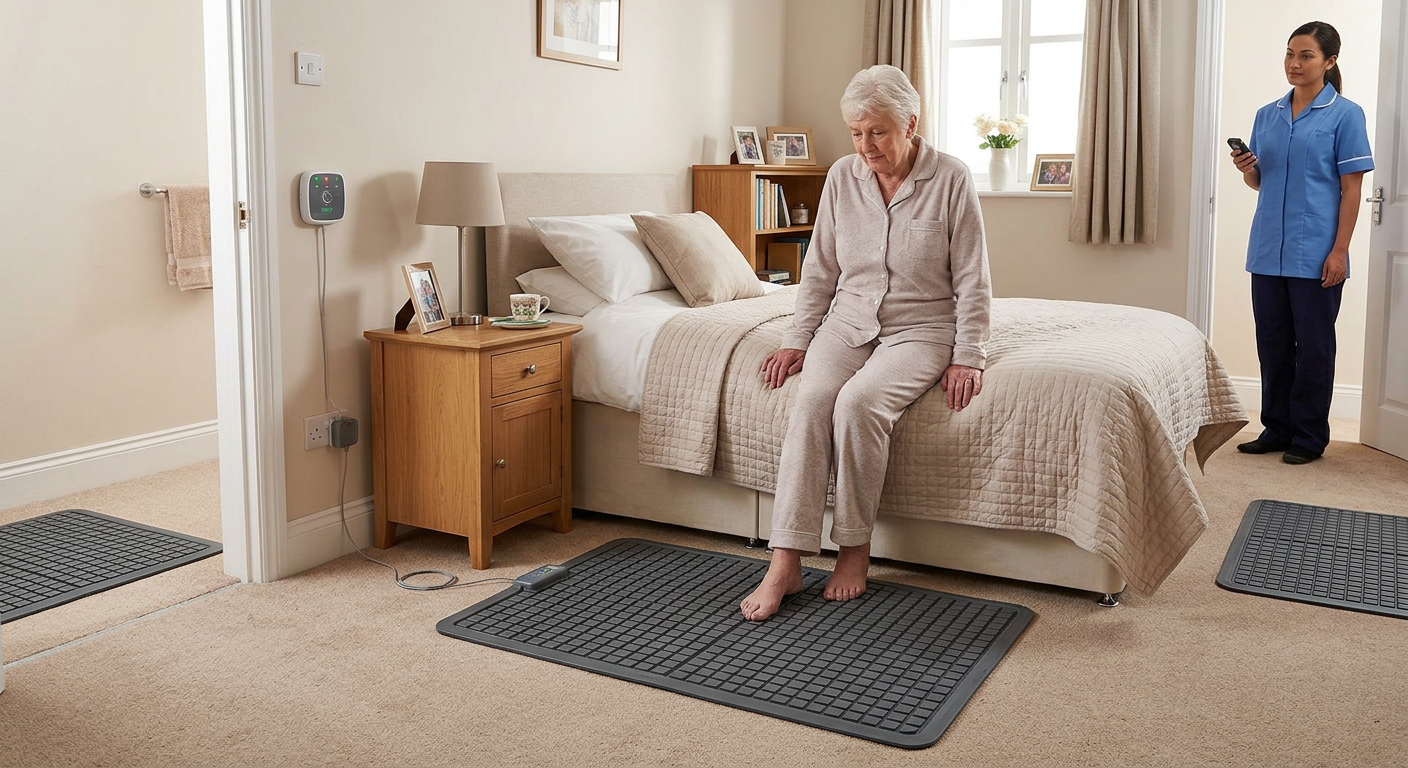
Bed exit and chair exit alarms are sensor-based devices that detect when a resident attempts to leave their bed or chair unassisted. When triggered, they alert care staff, via a local alarm, nurse call system, or mobile device, so that support can be provided quickly, reducing the risk of a fall.
They come in several forms:
- Pressure mats – placed on the floor beside the bed; trigger when the resident’s feet make contact
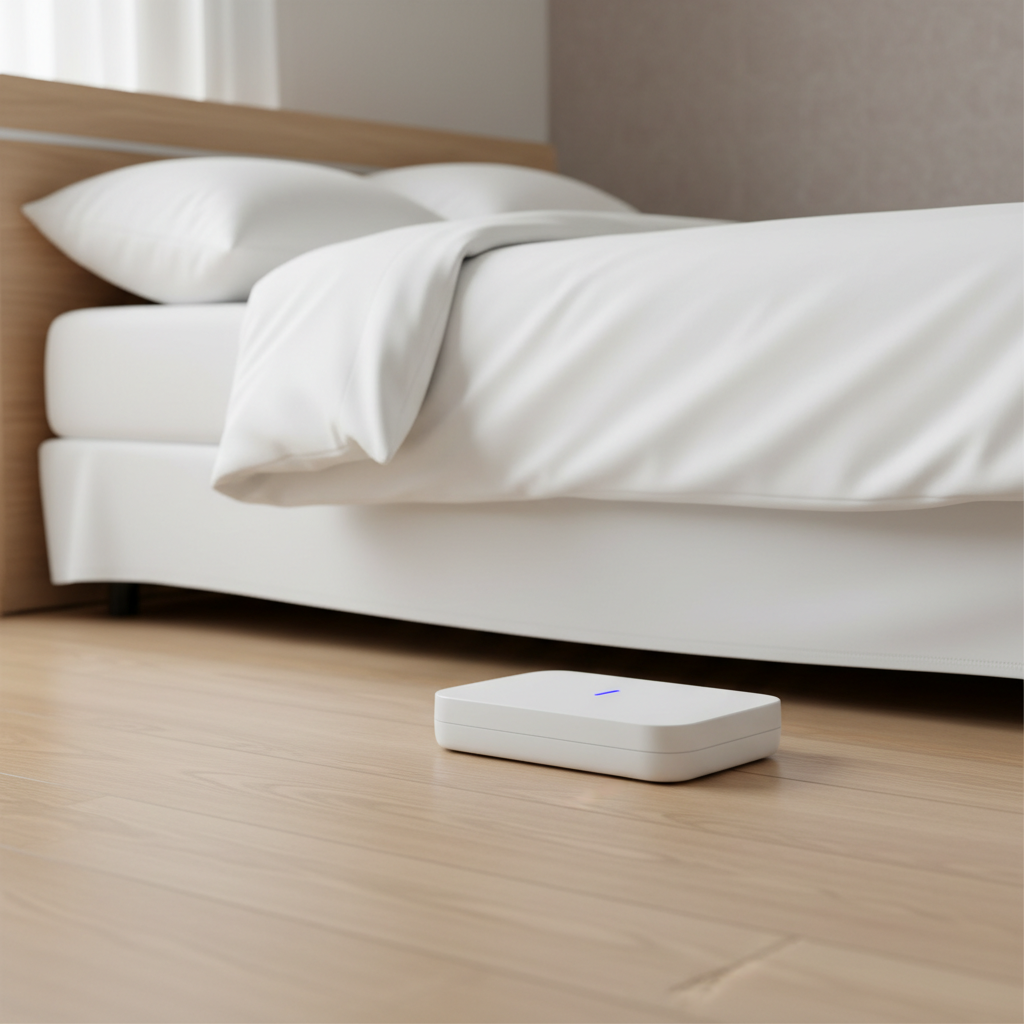
- Bed sensor pads – placed under the mattress or on the bed surface; detect when weight is removed
- Chair sensor pads – fitted to the seat of a chair; alert when the resident begins to rise
- Infrared beam sensors – detect movement across a defined zone without physical contact
- Wearable clip sensors – attached to clothing or bedding; trigger when the resident moves beyond a set position
Key Factors to Consider When Choosing a System
1. Resident Profile and Risk Level
Not every resident needs the same solution. A resident with moderate cognitive impairment and a history of night-time wandering has very different needs from someone recovering from a hip replacement. Before selecting a device, conduct an individual falls risk assessment and match the technology to the person, not the other way around.
For residents with dementia, consider whether a local audible alarm is appropriate. A sudden loud alarm can cause distress and agitation, potentially increasing the risk of a fall rather than preventing one. In these cases, a silent alert routed directly to staff via a nurse call system or mobile device is often a better choice.
2. Integration with Your Nurse Call System
Standalone alarms that sound only in the room are increasingly seen as inadequate. Modern falls prevention technology should integrate with your existing nurse call infrastructure, routing alerts to the right staff member at the right time. Before purchasing, check compatibility with your current nurse call platform, or factor in the cost of integration if you’re upgrading both systems simultaneously.
3. Sensitivity and False Alarm Rates
High false alarm rates are one of the most common complaints about bed and chair exit sensors. If alarms trigger too frequently, due to normal movement during sleep, for example, staff can become desensitised, leading to slower response times. Look for systems that offer adjustable sensitivity settings, and ask suppliers for data on false alarm rates in comparable care environments.
4. Ease of Use and Maintenance
Your care staff will be using these devices every day, often during busy shifts and at night. Choose systems that are simple to set up, reset, and maintain. Wireless systems generally offer more flexibility than wired alternatives, and rechargeable or long-life battery options reduce the burden of ongoing maintenance. Consider also how easy the devices are to clean, infection prevention and control is a non-negotiable in any care setting.
5. Data and Reporting Capabilities
The best modern falls prevention systems don’t just alert, they learn. Look for platforms that log alert times, response times, and incident patterns. This data can be invaluable for identifying high-risk periods (such as early morning or post-meal times), informing staffing decisions, and providing evidence for CQC inspections. If your falls prevention technology can’t generate a report, it’s working harder than it needs to.
6. Dignity and Least Restrictive Practice
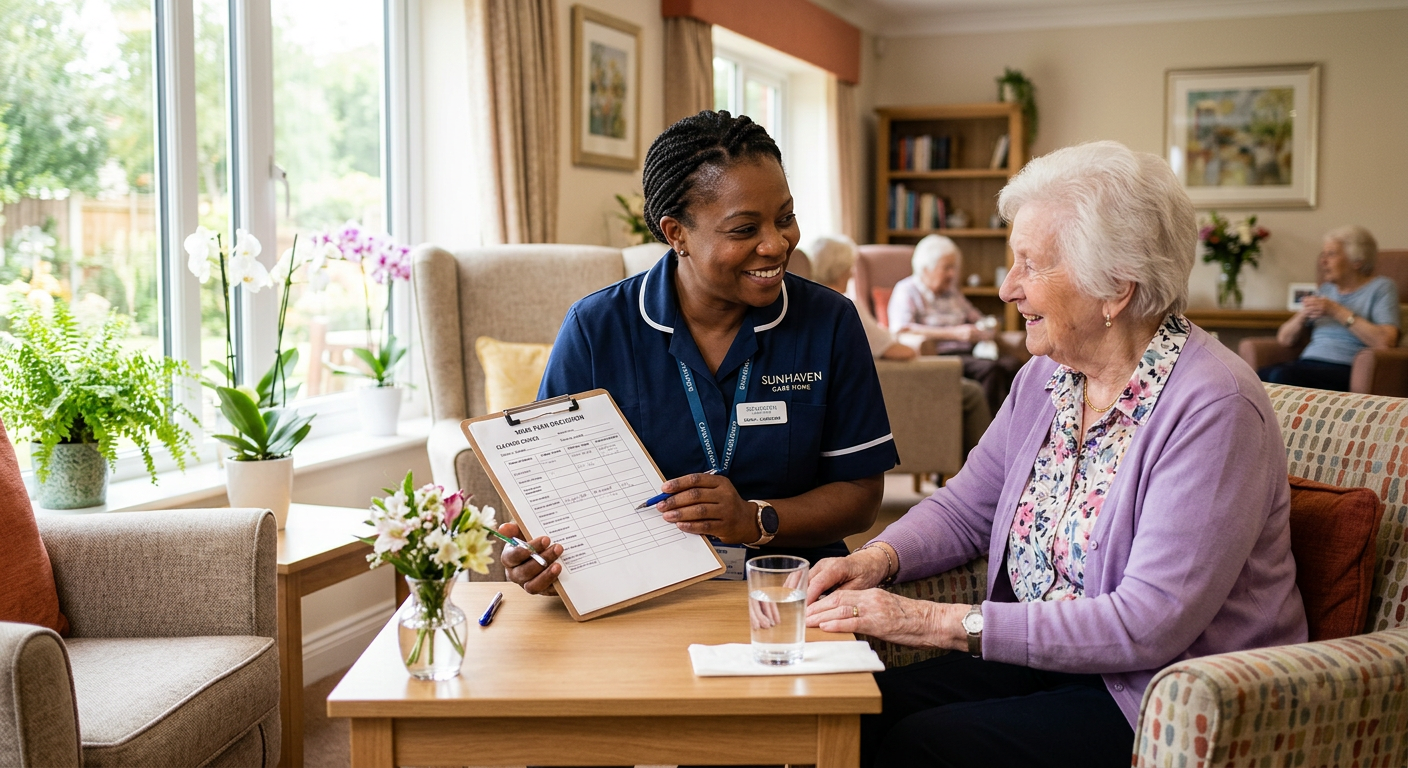
The Mental Capacity Act and the Care Act both place a strong emphasis on least restrictive practice. Bed and chair exit alarms must be used as part of a person-centred care plan, not as a blanket policy applied to all residents deemed to be at risk. Document the rationale for each device clearly, review regularly, and ensure that the use of any monitoring technology is proportionate, consensual where possible, and regularly reassessed.
Questions to Ask Your Supplier
- Does the system integrate with our existing nurse call platform?
- What are the false alarm rates in real-world care home deployments?
- Can alerts be routed silently to staff devices rather than sounding locally?
- What reporting and analytics does the system provide?
- What is the warranty, and what does ongoing support look like?
- Are there case studies from comparable UK care homes?
The Bottom Line
Bed and chair exit alarms are a proven and cost-effective component of any falls prevention strategy, but only when chosen thoughtfully and deployed as part of a wider, person-centred approach. The right system will reduce falls, support your staff, and provide the audit trail your quality and compliance teams need.
Take the time to assess your residents’ individual needs, evaluate your existing infrastructure, and ask the right questions of suppliers. Falls prevention technology is not a one-size-fits-all solution, and the care homes that get the best results are those that treat it as such.
Further Reading
- Why Every Dementia Care Home Needs a Wandering and Elopement Alert System, Now
- Digital Care Management Platforms in UK Care Homes: Where Are We in 2026?
- Care Homes Are Flying Blind. Shared Care Records Could Change That.
Related Reading
- Why Every Dementia Care Home Needs a Wandering and Elopement Alert System, Now
- The Care Home That Knows Before You Do: Why Ambient Assisted Living Is No Longer Optional
- The Call Bell That Time Forgot: Why Wired Nurse Call Systems Are Holding Care Homes Back
Frequently Asked Questions
How do bed exit alarms work in care homes?
Bed exit alarms use pressure-sensitive mats, infrared sensors or integrated bed monitoring systems to detect when a resident leaves or attempts to leave their bed. When triggered, the system alerts staff via a nurse call handset, pager or app—enabling rapid response to prevent falls.
Are bed exit alarms a form of restraint?
Using any alarm to prevent a resident from leaving their bed without consent can constitute a deprivation of liberty. Care homes must balance fall prevention with residents’ right to freedom of movement. Mental Capacity Act assessments and best interest decisions should be documented when considering exit monitoring for residents who lack capacity.
What is the difference between a fall detector and a bed exit alarm?
A bed exit alarm alerts staff before a fall occurs—when a resident is getting up. A fall detector (typically a wearable device or floor sensor) alerts after a fall has happened. Best practice for high-risk residents combines both: an exit alarm for early warning and a fall detector as a secondary safety net.