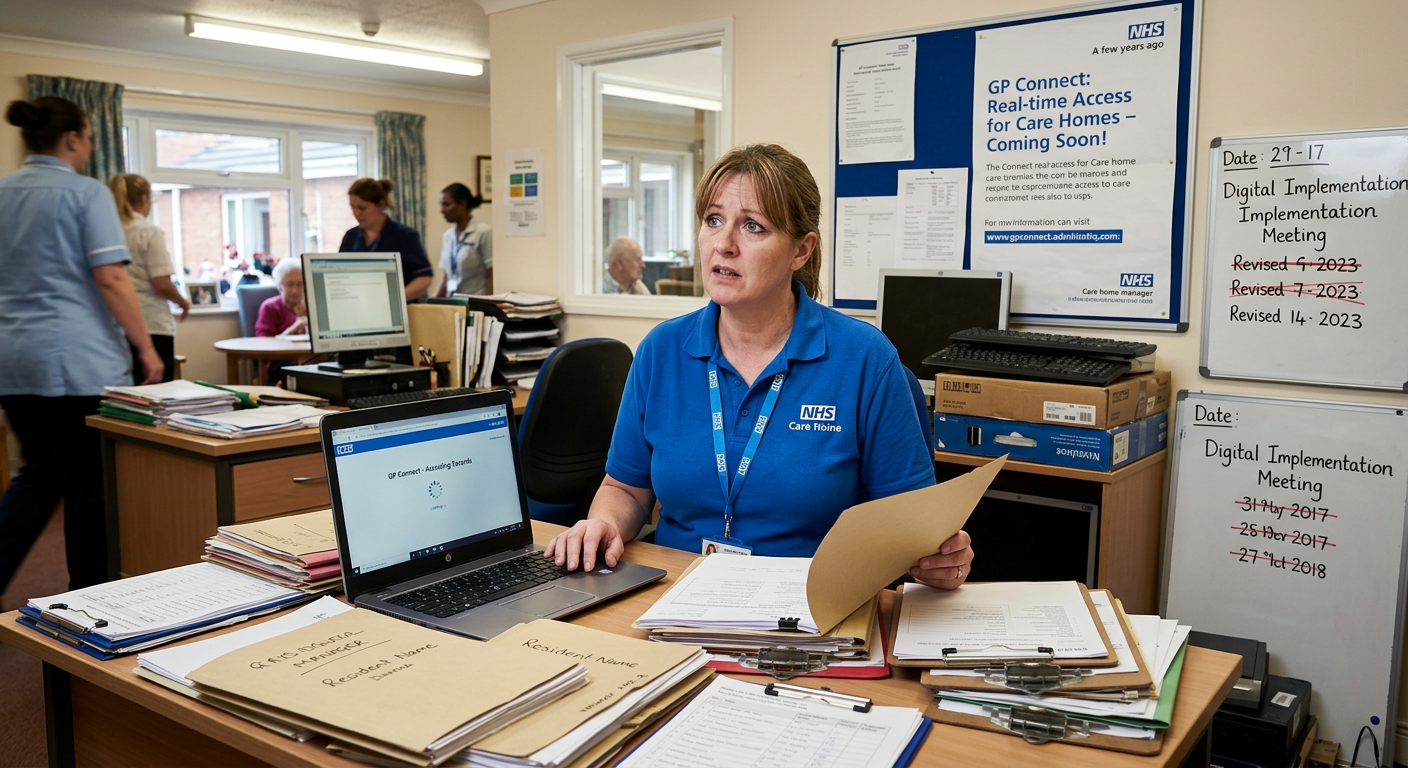


Every day, across thousands of care homes in England, staff make clinical decisions without the full picture. A resident is rushed to A&E and the paramedics have no idea what medications she’s on. A GP visits and has to ask the same questions that were answered at the last three appointments. A new admission arrives from hospital with a discharge summary that contradicts the care plan already on file. These are not edge cases. They are the daily reality of a sector that has been systematically excluded from the NHS data infrastructure it depends on.
Shared Care Records, the regional and national platforms designed to give health and care professionals a unified view of a patient’s history, represent one of the most significant structural shifts in how care is delivered in this country. And yet, for most care homes, access remains partial, inconsistent, or entirely absent. That needs to change. Not eventually. Now.
The Access Gap Nobody Talks About
The NHS has invested heavily in Shared Care Record infrastructure. Integrated Care Systems across England have built or procured platforms, from the Yorkshire and Humber Care Record to the London Care Record, that aggregate data from GP systems, hospital trusts, community services and mental health providers. The ambition is laudable. The execution, where care homes are concerned, has been patchy at best.
The reasons are familiar to anyone who has worked in this space. Care homes sit in an awkward institutional position: they are not NHS providers, yet they deliver health-adjacent care to some of the most clinically complex people in the country. They are regulated by CQC, funded through a mixture of local authority, NHS and private arrangements, and staffed by a workforce that has historically been excluded from NHS digital programmes. When Shared Care Record access is being scoped, care homes are often an afterthought, or a future phase that never quite arrives.
The consequences are measurable. Research consistently shows that poor information sharing between care homes and NHS services contributes to avoidable hospital admissions, medication errors, and duplicated assessments. The care home sector looks after around 400,000 people in England at any given time. These are not low-acuity residents. They are older people with multiple long-term conditions, complex medication regimes, and frequent contact with health services. Denying their care teams access to a shared record is not a minor inconvenience; it is a patient safety issue.
What Good Looks Like, and Why It’s Still Rare
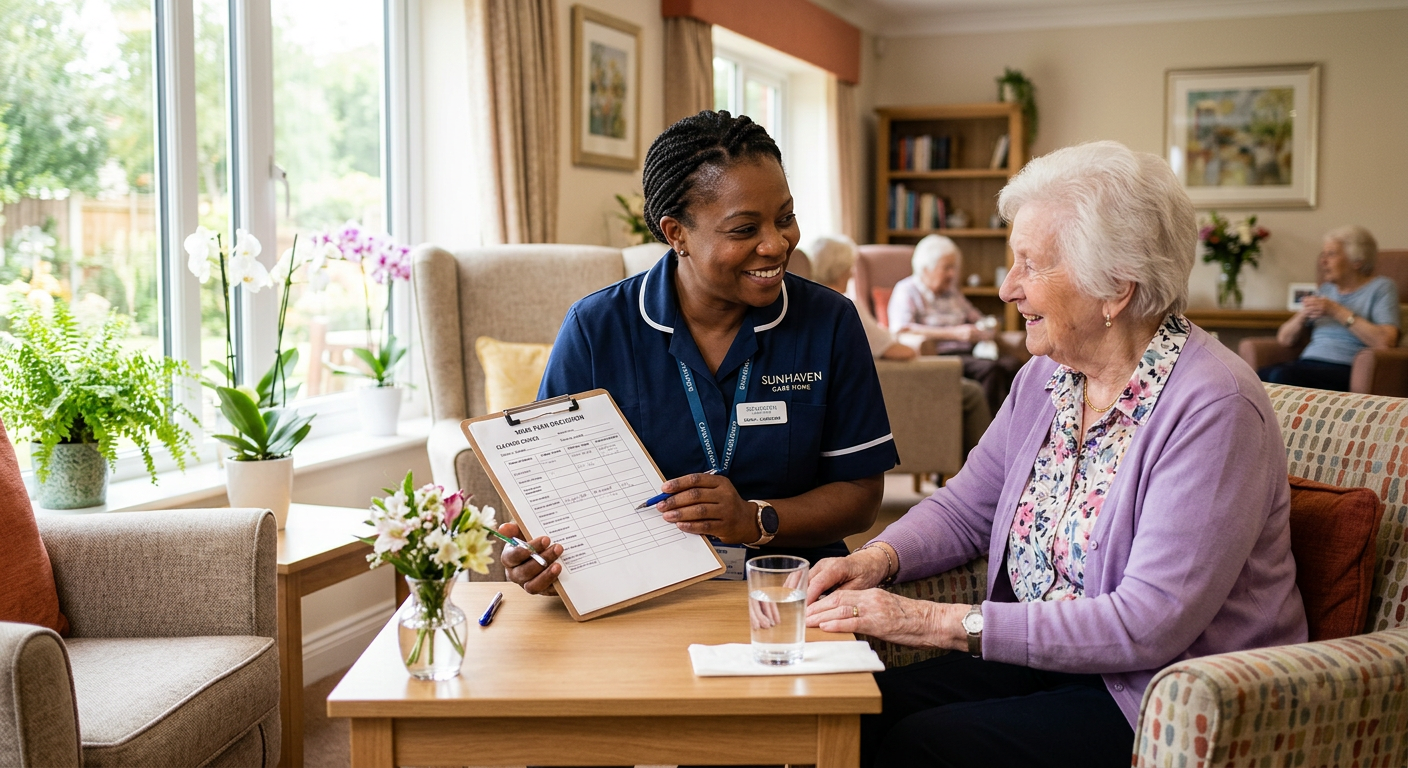
Where Shared Care Record access has been rolled out to care homes, the results are instructive. Staff report being able to check a resident’s recent blood test results before escalating to a GP. Managers describe catching medication discrepancies that would previously have gone unnoticed until something went wrong. The ability to see a resident’s hospital discharge summary in real time, rather than waiting for a fax or a phone call, transforms the quality of the handover.
But these examples remain the exception. The barriers are structural as much as technical. Care homes need to meet information governance requirements, including completion of the Data Security and Protection Toolkit, before they can be granted access. Many smaller providers lack the IT infrastructure or the dedicated staff time to navigate that process. And even where the governance hurdles are cleared, the integration between care home management systems and Shared Care Record platforms is often non-existent, meaning staff must log into a separate system, remember separate credentials, and manually cross-reference information rather than having it flow into their existing workflows.
The Interoperability Imperative
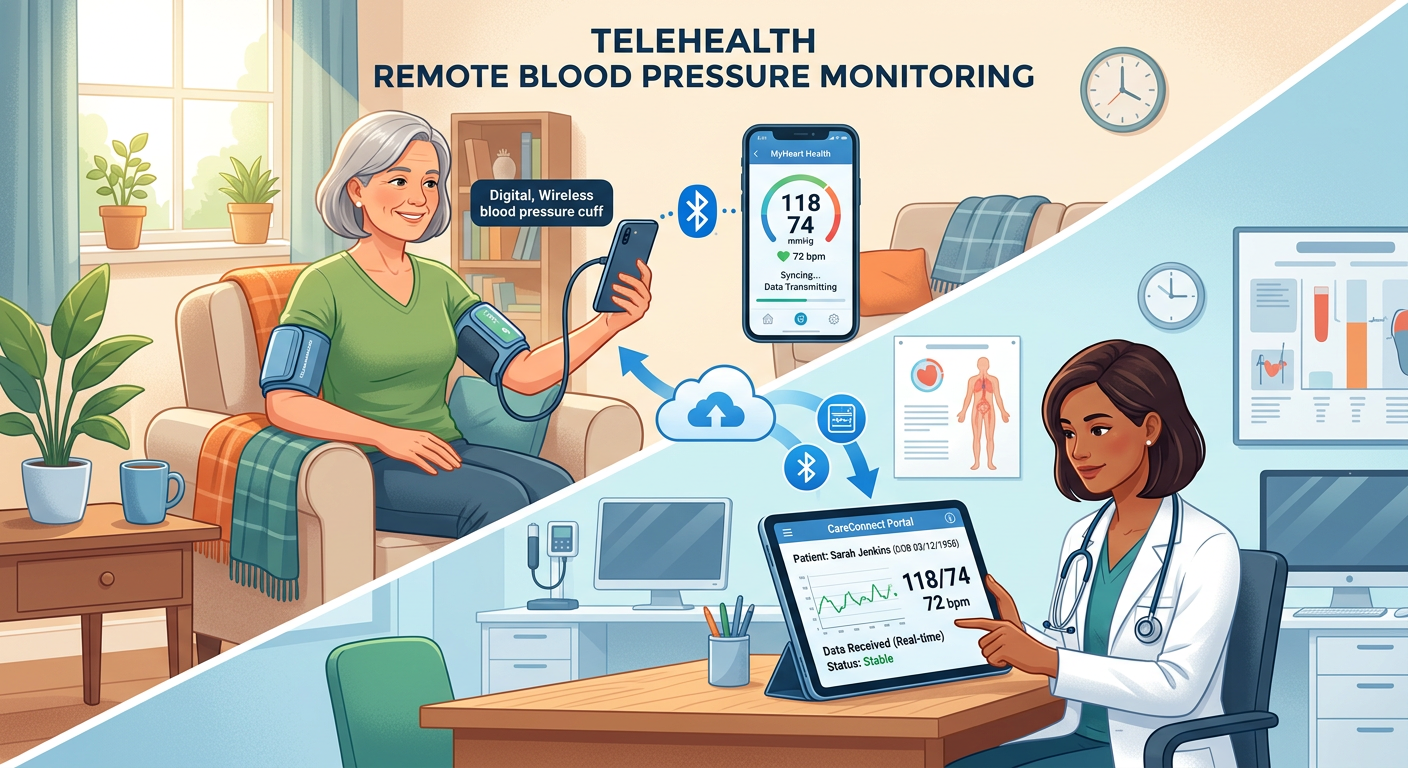
This is where the conversation needs to mature. Access to Shared Care Records is necessary but not sufficient. What the sector actually needs is genuine interoperability; the ability for data to flow bidirectionally between care home systems and the wider health record infrastructure. That means care homes not just reading NHS data, but contributing to it: updating records when a resident’s condition changes, flagging medication changes, recording falls and incidents in a way that is visible to the GP and the community nursing team.
The technology to do this exists. FHIR-based integration standards, which underpin much of the NHS’s current interoperability strategy, are increasingly being adopted by care management software providers. The question is whether the commissioning and procurement frameworks that govern Shared Care Record platforms will mandate care home integration, or continue to treat it as optional.
Integrated Care Boards have a critical role to play here. Those that have made care home digital inclusion a strategic priority are already seeing the benefits in reduced hospital admissions and more effective community health teams. Those that haven’t are storing up problems, and costs for later.
A Sector That Must Advocate for Itself
Care home providers cannot afford to wait passively for the NHS to extend the invitation. The most forward-thinking operators are already engaging with their local ICS digital teams, completing DSPT submissions, and making the case for inclusion in Shared Care Record rollouts. They are asking the right questions of their care management software suppliers: when will you support GP Connect? What is your FHIR roadmap? How will our data flow into the regional record?
These are not technical questions for IT departments. They are strategic questions for boards and senior leadership teams. The care home that has real-time access to its residents’ full health history is not just better placed to deliver safe care, it is better placed to demonstrate that safe care to regulators, commissioners, and families.
Shared Care Records are not a silver bullet. But they are a foundation. And right now, too many care homes are building on sand.
Further Reading
- DSPT Compliance Tools for Care Homes: A Practical Guide
- Digital Care Management Platforms in UK Care Homes: Where Are We in 2026?
- Your Resident Has a Digital Twin. Now What?
- Why Every Dementia Care Home Needs a Wandering and Elopement Alert System, Now
Related Reading
- The CQC Inspection Is Coming. Is Your Evidence Ready, or Just Somewhere on a Shelf?
- Digital Care Management Platforms in UK Care Homes: Where Are We in 2026?
- The GP on the Screen: Video Consultations in Care Homes Are Still Falling Short. Why?
Frequently Asked Questions
What are shared care records for care homes?
Shared care records are digital systems that allow authorised health and social care professionals to view a common record of a patient’s care history, regardless of which organisation holds the information. They enable care homes to access GP records, hospital discharge summaries and community nursing notes in one place.
Do care homes have access to NHS shared care records?
Access varies by integrated care system. NHS England’s ambition is universal access, but rollout has been uneven. Many care homes still rely on faxed or phoned discharge summaries. Where shared records are available, they require care homes to have approved access accounts and staff trained to use the portal.
What are the benefits of shared care records for care home residents?
Shared records reduce medication errors at transitions of care, enable faster clinical decisions when residents deteriorate, eliminate duplicate assessments, and support continuity when residents move between settings. Research suggests they also reduce avoidable hospital admissions by enabling earlier community intervention.