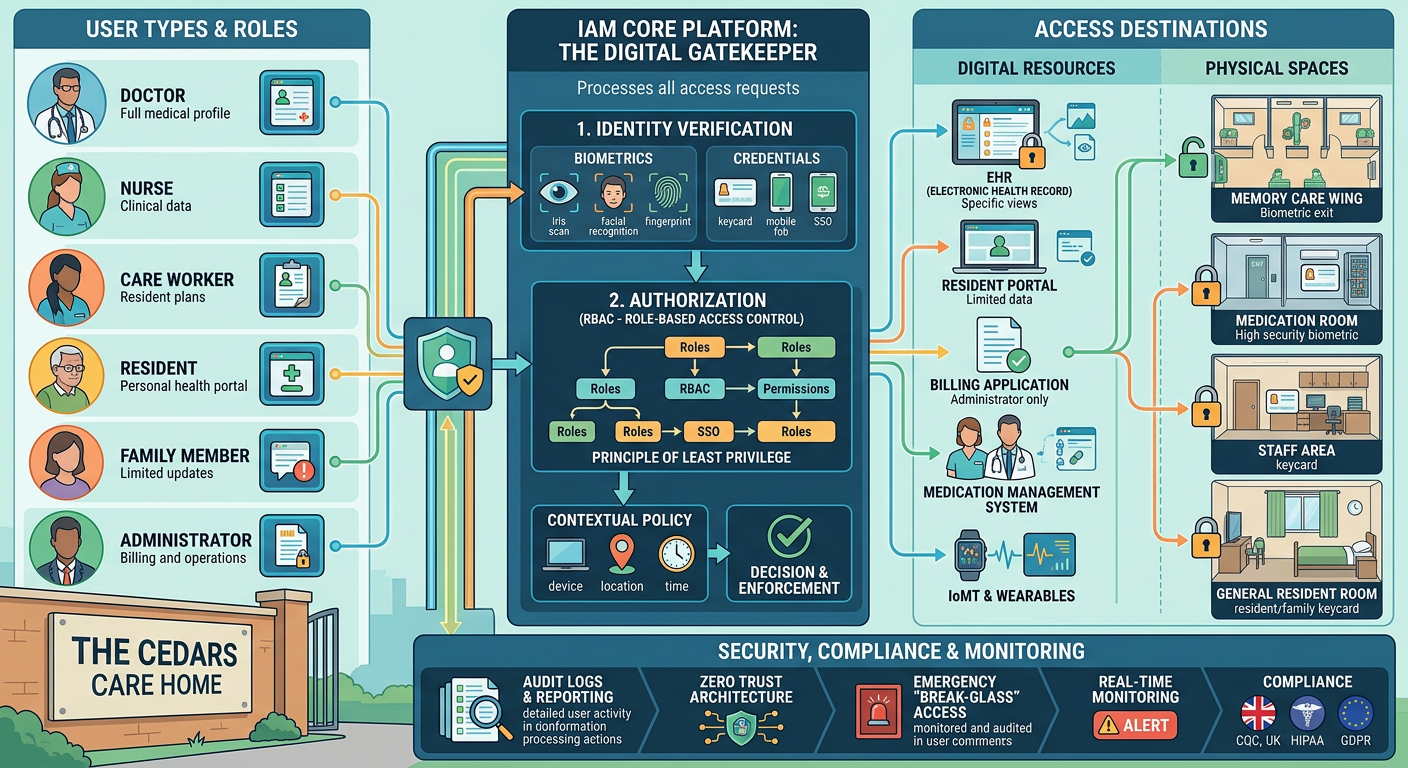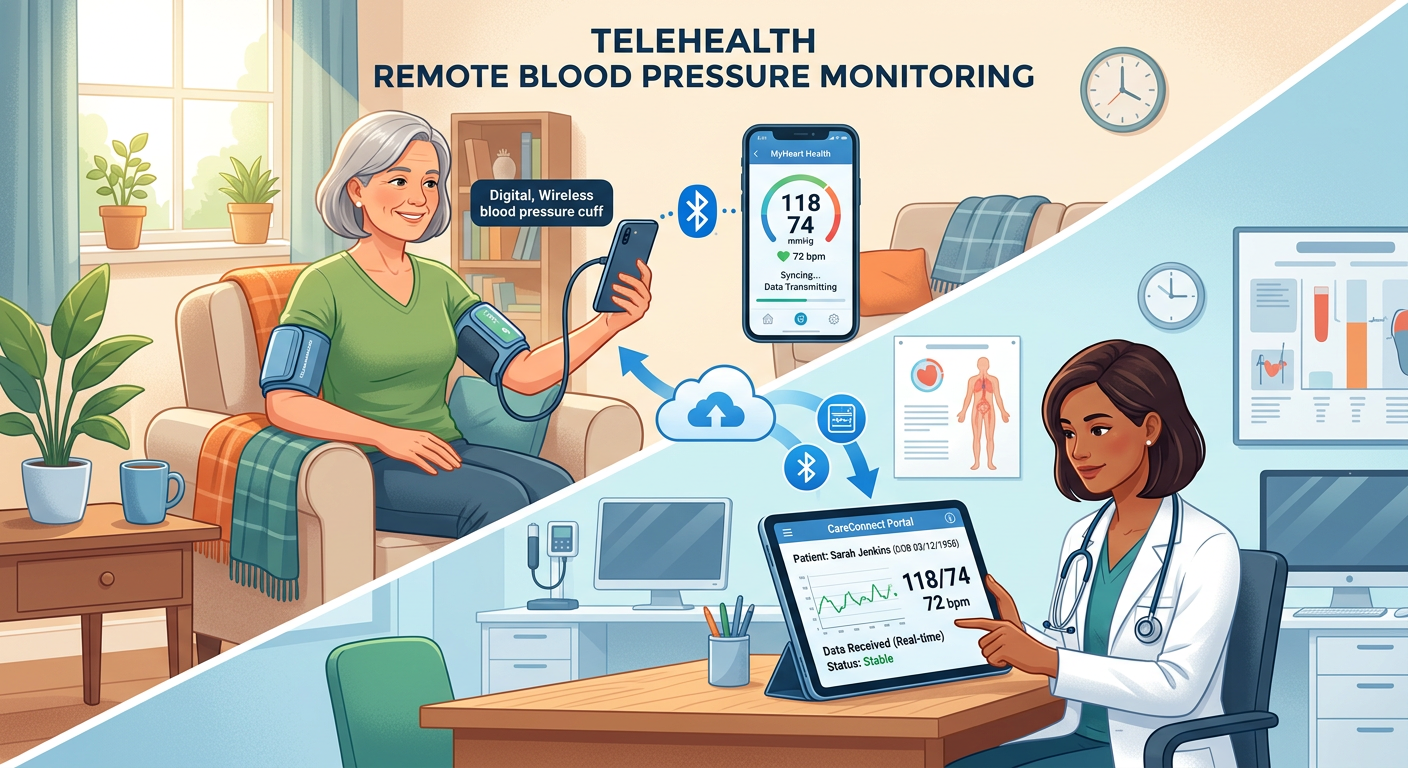


Walk into most UK care homes and you will find two parallel worlds operating in uneasy coexistence. In one, care staff are logging observations on digital platforms, receiving alerts on smartphones, and accessing resident records in real time. In the other, the building itself remains stubbornly analogue – heating controlled by a dial on the wall, energy consumption tracked by a monthly bill, maintenance faults reported by whoever happens to notice them first. The gap between these two worlds is not just an inconvenience. It is a risk.
Building Management Systems (BMS, in the industry shorthand) have been standard in commercial real estate, hospitals and large public buildings for decades. They integrate control of heating, ventilation, air conditioning, lighting, energy and security into a single, monitored platform. In the NHS, BMS is considered essential infrastructure. In adult social care, it remains the exception rather than the rule. That needs to change, and the sector’s continued reluctance to engage with it deserves scrutiny.
The Hidden Cost of Unmanaged Buildings
The financial case alone should be compelling. Energy costs represent one of the largest controllable overheads for a care home operator, and most providers have only a vague sense of where that energy is actually going. A BMS changes that fundamentally. By monitoring consumption in real time, by zone, by system, by time of day, operators can identify waste, optimise heating schedules around occupancy patterns, and respond to anomalies before they become expensive failures.
But the argument for Building Management Systems in care settings goes well beyond energy bills. Temperature regulation is a clinical issue. Older adults, particularly those with dementia or limited mobility, are acutely vulnerable to both overheating and cold. A room that drifts two degrees above the recommended range overnight is not just uncomfortable, it is a safeguarding concern. A BMS that monitors ambient conditions continuously and alerts staff to deviations is performing a function that no rota can reliably replicate.
The same logic applies to air quality. Post-pandemic, the sector has a heightened awareness of ventilation and infection risk, yet most care homes still have no systematic way of monitoring CO₂ levels, humidity or particulate matter. Environmental sensors integrated into a BMS platform can flag conditions that increase infection transmission risk, quietly, continuously, without requiring anyone to remember to check.
Maintenance: From Reactive to Predictive
Perhaps the most underappreciated benefit of a modern BMS is what it does to maintenance culture. The default in most care homes is reactive: something breaks, someone reports it, someone fixes it. This is expensive, disruptive and, in a care environment, occasionally dangerous. A lift that fails unexpectedly. A boiler that gives out in January. A fire door that has been subtly misaligned for months before anyone notices.
A well-configured BMS shifts this dynamic. By monitoring the performance of mechanical and electrical systems continuously, it can identify the early signatures of failure; unusual energy draw from a pump motor, irregular cycling in an HVAC unit, and generate alerts before the fault becomes critical. This is predictive maintenance, and while it has been standard practice in manufacturing and aviation for years, it remains largely absent from care home estates management.
The regulatory dimension matters here too. CQC‘s inspection framework places significant weight on the safety and suitability of premises. Providers who can demonstrate systematic, data-driven oversight of their building environment, rather than relying on paper-based maintenance logs and staff observation, are in a materially stronger position. A BMS generates an audit trail that a clipboard never can.
The Integration Opportunity
The most forward-thinking operators are beginning to see BMS not as a standalone estates tool but as a layer of the broader digital care ecosystem. When building data, room temperatures, door access events, lighting states, can be correlated with care data, the analytical possibilities expand considerably. A resident who is sleeping poorly might be in a room that is consistently too warm. A pattern of night-time corridor activity might reflect inadequate lighting rather than a clinical issue. These connections are invisible when building systems and care systems operate in separate silos.
Integration between BMS platforms and care management software is still nascent, but the technical foundations exist. FHIR-based data standards, open APIs and cloud-based platforms are making it increasingly feasible to bring environmental data into the same analytical layer as clinical data. The providers who invest in that infrastructure now will have a significant advantage as the sector’s data maturity develops.
The Barrier Is Not Technology
It would be convenient to blame the slow uptake of BMS in care homes on cost or technical complexity. Neither holds up under examination. Entry-level BMS solutions have become significantly more affordable as IoT hardware costs have fallen, and cloud-based platforms have removed the need for expensive on-site servers. Implementation can be phased, starting with energy monitoring and environmental sensors before expanding to full building integration.
The real barrier is cultural. Estates and facilities management has historically been treated as a support function in care; necessary but unglamorous, the domain of the maintenance manager rather than the board. Digital transformation conversations in the sector have focused almost exclusively on clinical and care management technology. The building has been left out of the conversation.
That framing is no longer sustainable. In a sector under sustained financial pressure, where energy costs are volatile, where regulatory scrutiny of premises is intensifying, and where the connection between environment and resident wellbeing is increasingly well evidenced, the building is not background infrastructure. It is a clinical asset. It is time the sector started treating it like one.
Related Reading
- The Call Bell That Time Forgot: Why Wired Nurse Call Systems Are Holding Care Homes Back
- The Care Home That Knows Before You Do: Why Ambient Assisted Living Is No Longer Optional
- DSPT Compliance Tools – Boring But Essential
Frequently Asked Questions
What is smart building technology in care homes?
Smart building technology in care homes encompasses automated lighting, heating and environmental controls, integrated access control systems, IP-based nurse call infrastructure, sensor networks, and energy management platforms. Together these systems create an environment that responds to residents’ needs and optimises operational efficiency.
How much can smart building technology save care homes?
Energy savings from smart HVAC and lighting controls typically range from 15–30% of energy bills. Maintenance savings from predictive fault detection can be significant. The harder-to-quantify benefit is resident safety improvement from integrated monitoring and faster staff response via intelligent alerting.
Do care homes need special planning permission for smart building upgrades?
Generally no, for internal technology upgrades. Installing new cabling, access control or sensor networks in existing buildings is typically covered under permitted development. Listed buildings or those in conservation areas may require consultation. Structural changes to accommodate infrastructure are subject to normal planning rules.